
‘Asian artists are now influencing the west’: Lexie Liu meets Yves
The two trailblazing pop artists speak on the differences between Korean and Chinese pop culture, innovating on their respective lineages, and why BTS’ recent decision to swerve the Grammys is a power move
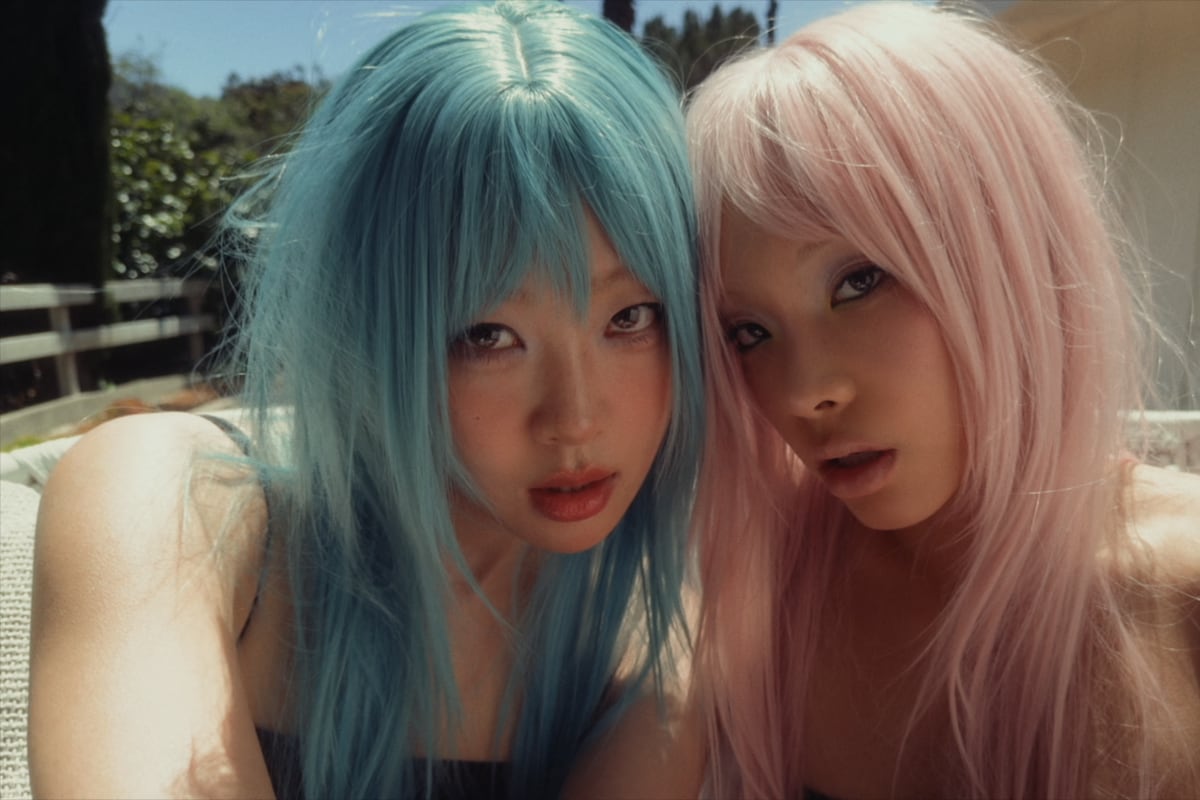
“I feel like I’m building the road as I walk on it,” says new-generation Chinese pop star Lexie Liu. She’s speaking via video call to K-pop idol-turned-solo artist Yves, who nods in agreement, knowing that feeling all too well.
You see, both artists are trailblazers. Liu, born in Changsha, China in 1998, first rose to prominence as a finalist on zeitgeist-defining competition show The Rap of China in 2018, emerging as part of a radical new wave of pop culture sweeping the country. Yves’ own innovation arrived a little later. Born in Busan, she entered South Korea’s idol system and was introduced as a member of girl group LOONA in 2017, before striking out solo in 2024. Her subsequent career speaks to a broader shift taking place in K-pop, as some stars begin to move away from the genre’s typically polished idol aesthetics in favour of something messier and more personal.
These distinct yet complementary approaches to modern pop stardom frame the pair’s latest collaboration, “Pop Girl”, released last month. Backed by a lead synth melody that wobbles in and out of tune, tech-heavy visuals and English-Korean lyrics that reference beauty filters, TikTok livestreams and doomscrolling, there’s an undeniable futurism to the track. It’s a snapshot of a pop culture currently in flux – shifting, as the pair themselves point out, away from traditional industry gatekeepers and its historic centre of gravity in the West.
Below, in an aegyo-filled conversation that saw the two future-facing popstars repeatedly mime heart-beams at each other from across the world, Lexie Liu and Yves speak on innovating on their respective pop lineages, BTS’ recent decision to swerve the Grammys, and power shifts in the pop landscape more widely.
How did you both first come into contact?
Yves: It was Lexi who chose me [for this song] first. She DM’d me and gave me the idea of the collaboration. I loved Lexie’s music even before my solo debut. The first ever song I liked on Spotify was Lexie’s “Fortuna”, so I was really happy to work with her. I think that Lexie’s work is really futuristic. We have a lot of similarities because we try to be different from what’s expected.
Lexie Liu: I’ve been a fan of Yves’ solo career ever since [2024 single] ‘Loop’. Then, at some point, I saw a fan post a screenshot of Yves sharing one of my songs, and I remember being really happy about that. So there was already this back-and-forth of us showing love to each other before we worked together. I think we’re similar in the sense that we both really care about having a strong individual identity within the realm of pop music. We both come from places with very different pop ecosystems, but neither of us seems interested in just following what is already there.
You mentioned coming from different pop ecosystems. Could you speak a bit more about that?
Yves: I was trained in the K-pop system as an idol – a part of this ‘perfect’ system, where performance, visuals, and concept are all connected. But after my solo debut, I tried to be more independent in looking for the visual or musical concept [myself]. I spent a lot of time thinking about who I wanted to be, and that’s when I tried experimenting with hyperpop. I didn’t want to restrict myself to the hyperpop genre; I wanted to keep finding new characters for myself.
Lexie Liu: I think what Yves is doing is really interesting because she comes from this incredibly developed tradition and is now finding ways to bend it into something that feels completely hers. For me, the challenge is kind of the opposite, because in China there isn’t really an equivalent path to becoming a globally recognised pop artist. I’m building the road while walking on it. That uncertainty is definitely frustrating at times, but it’s creatively exciting because there are fewer rules.
What does the title “Pop Girl” mean to you both?
Lexie Liu: I think being a pop girl is more of a mindset than a status. It’s for the people who have their own soundtrack when they walk down the street; they don’t overthink about how they express themselves, and they know how to make an ordinary day feel fabulous and special. Maybe they even cry at night because of insecurity as well. That’s not a prerequisite, but it happens. Everyone’s invited.
Yves: For me, I think a pop girl is not defined by how you look or how successful you are, but rather someone who doesn’t hide their ambition or vulnerability, and someone who can translate that complexity into a language. We say ‘girl ’, but it’s not a matter of age or gender; it’s more of an attitude, and that’s why being a pop girl doesn’t have any auditions or interviews you need to pass.
“K-pop is the trailblazer of showing the Western world what a confident Asian would look like on stage”
– Lexie Liu
Lexie, you mentioned building the path as you were walking on it. What sorts of sounds and spaces are you exploring?
Lexie Liu: It’s everything that isn’t already written in the books. I think [Chinese rappers] Billionhappy or SkaiIsYourGod, are good examples. Everyone’s basically a wild card now – [Chinese people] are more connected to the world than ever; we’re in an age where the internet has made it so easy to access everyone, but it’s also challenging because so much music drops every day. It takes luck, determination, and authenticity to stay true to yourself, but very soon people are going to discover many new forms of popular music coming out of China.
Meanwhile, Yves, you mentioned exploring hyperpop, which is something other K-pop artists like Seventeen’s The8 and Vernon are doing, too. Do you think this is becoming a wider trend of K-pop going underground?
Yves: Initially, K-pop was influenced a lot by American and European markets; we borrowed a lot from them. But now, I think K-pop has its own unique character, and we’re trying to expand into a wider spectrum of genres. I don’t think the question is about how far a K-pop artist can go, but rather about how diverse K-pop artists can be, and, because we have such diverse aesthetics, at least one of them is going to be underground.

BTS recently decided to withdraw from the Grammys, which could be seen as a power move, given the increasing influence of East Asian artists more widely. Where do you think the future is headed for pop artists from eastern countries?
Yves: Like I said earlier, the market was really centred around the US and Europe, and I think there was a bias. People were thinking that Western is global and all the rest are regional, but Asian culture has always been there; it just wasn’t noticed. But now Asian music and culture are influencing the West as well.
I really respect what BTS have done, because giving a separate award for Asian regions is actually creating a boundary between the world and Asia. It’s creating a boundary between ‘mainstream’ and ‘Asian’ artists. It’s taking Asia out of the mainstream.
Lexie Liu: K-pop is definitely the trailblazer of showing the Western world what a confident Asian would look like on stage. For the future, I think it’ll feel less and less like Eastern artists crossing over, more like everyone just existing in the same global conversation. Nowadays, people are open to music from different languages and cultures, so the idea of what feels global is naturally expanding. It gives artists from Asia more space to be themselves instead of trying to fit into one box of what global pop should sound like. The ideal future is one where Asian artists are simply recognised as pop artists without being put in a separate category.
Do you have any questions for each other?
Yves: Where do you see yourself in ten years?
Lexie Liu: Honestly, I don’t know. I’m just enjoying being a wild card – building the path, walking on the path and not knowing where it is leading me. But I won’t quit making music until I physically can’t. So, ideally, I would still be on stage and singing stuff that really comes from my heart. And my question for you, Yves: what’s something about yourself that you only discovered after starting your solo career?
Yves: I used to consider myself as someone who’s really soft-hearted but after my solo debut, there were a lot of situations where I had to handle issues, troubles, and frustration with things – new challenges I hadn’t faced in the past. I’ve discovered myself as someone who doesn’t break but bends instead. I discovered resilience in myself after I became solo.
Lexie Liu’s latest EP, Pop Girl Club, is out now.
Originally published by dazeddigital.com. Syndicated material does not necessarily reflect the views of GQ British Lifestyle.


