
Nicola Dinan and Ione Gamble on the power of admitting your desires
The writers dive into rejecting the cultural fear of cringe, having the patience to get to know someone and other lessons from working with a real Hinge couple for the No Ordinary Love audiobook
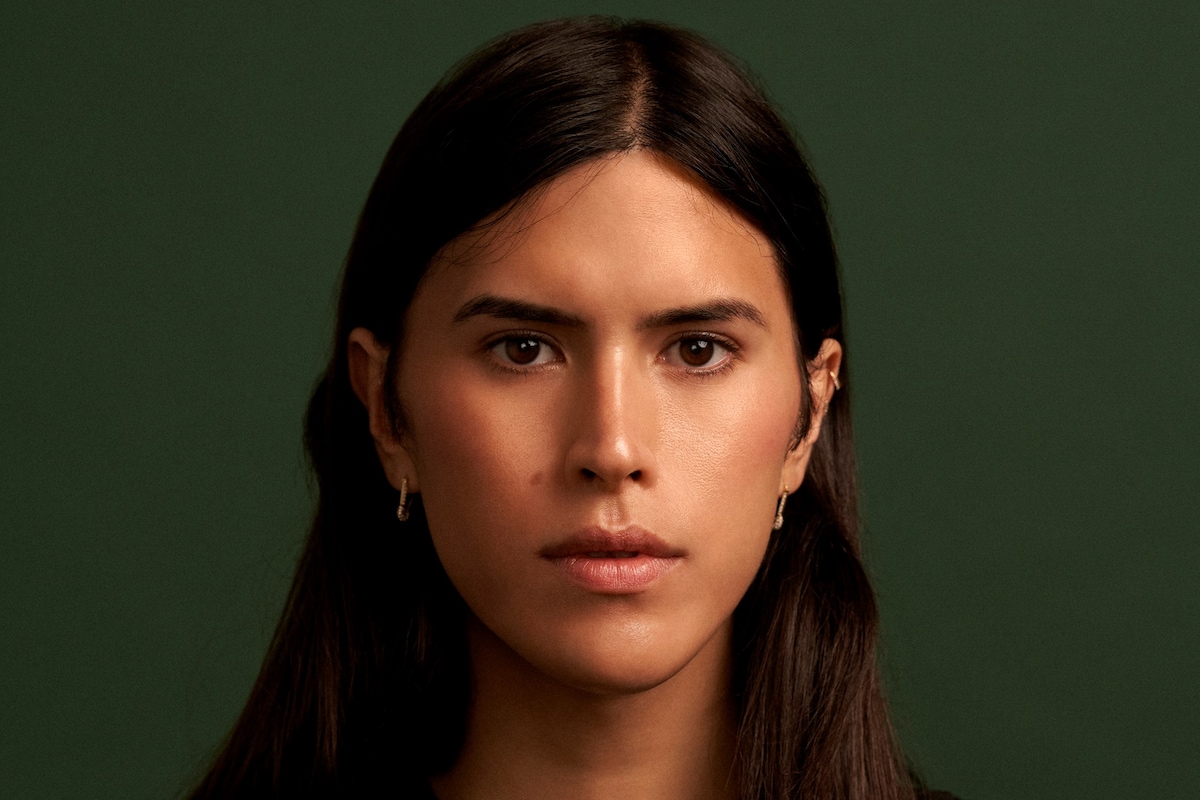
Author Nicola Dinan is known for writing literary romances that offer a deeply realistic and honest portrayal of modern dating, subverting previous tropes of the genre. Her debut novel, Bellies, is structured around a pivotal early-twenties breakup, and her most recent novel, Disappoint Me, explores the pain of disillusionment. Through writing, she says she’s been able to reflect on her own dating experiences and, sometimes, predict future ones. “So many of the situations I wrote about in Disappoint Me hadn’t happened to me yet, but after I wrote them, [they] started happening,” she says. “It became a manual for me about how to approach these next stages of life.”
The story that author Nicola Dinan wrote for Hinge’s No Ordinary Love audiobook starts with a sentence that is bound to make anyone anxious in the early stages of dating: “There’s something I want to talk to you about”. In Rules to Love By, Raka and Carty, a real couple that met on Hinge, navigate through Carty’s “rules” for taking it slow with the hope of dating with intention.
No Ordinary Love celebrates the risks – both big and small – we take in dating, and reinforces the importance of saying how you feel out loud. The new audiobook features four other stories written and read by Tembe Denton-Hurst, Curtis Garner, Raven Smith and Rufi Thorpe. You can listen to it now on Spotify or Substack.
Ahead, Dinan joins fellow writer Ione Gamble, founding editor and chief of the Polyester Zine, a self-published, intersectional feminist arts and culture publication, to discuss the power of admitting your desires out loud, rejecting the cultural fear of cringe and having the patience to get to know someone.
Ione Gamble: Today, we’re here to talk about Hinge’s No Ordinary Love and the story you wrote for it. What was the process?
Nicola Dinan: I had two conversations with Raka and Carty, so the first was getting to know them off the bat. How they met, what these key moments in their relationship were, particularly around Carty setting these rules for dating, which were very much her having this moment or year, even, of introspection and thinking, ‘Why haven't the relationships I've been in worked out’ and planning these rules to almost tame her own worst instincts. I met them again and had another long conversation just trying to get those details to make the story feel alive, but also to bring the story a little bit closer to what they experienced with each other.
Ione Gamble: You get a sense of both of them, for sure. It’s a nice vignette of them and the early stages of that relationship.
Nicola Dinan: I’m not really a short story writer. I’m so used to novels as a form where you have so much freedom for things to take time, whereas when you’re working in short stories, you need to understand a character so much quicker, so that was another big challenge of it. But, also, there was an ease to it because Carty and Raka made it so incredibly easy for me to form characters because they were just so interesting, and they had such interesting hobbies. They were so forthcoming with all of these special details about their life, like how Carty loves restoring old cameras, how Raka studied civil engineering and then decided to become an actor.
Ione Gamble: Yeah, definitely. So, your first two books are literary romances, and you often subvert tropes of that genre. What about today’s dating climate makes for such compelling, unexpected love stories?
Nicola Dinan: So many people, and I'd say particularly women, are really reckoning with the role that romantic relationships play in their lives. There’s tension between really wanting to love and be loved while grappling with these promises engendered by the previous generation of romance novels that very much sold us on this fantasy idea of romance.
Ione Gamble: Do you feel like that interrogation is leading to people changing their habits? I feel like, even in your No Ordinary Love story, not only are these things thought about, they’re also vocalised very openly.
Nicola Dinan: Yeah, definitely. I think there’s a general sense of questioning oneself and almost acknowledging that we have many selves and not all of them are necessarily conducive to our own sense of comfort and happiness. And that’s where we see Carty. There’s something about the word ‘rules’ that feels kind of authoritarian, but Carty’s rules weren’t to manipulate Raka to like her. It was about reflecting on herself and allowing Raka to either accept that or leave it.
What’s an unspoken part of modern dating etiquette you wish we all would get rid of?
Ione Gamble: I think there are some rules, like you shouldn’t be rude. But I don’t have the level of restraint your subjects have. If I want to reply five times, I will.
Nicola Dinan: Yeah, and I think you should. There’s a distinction between if [the rules are] actually more about doing what’s best for yourself versus trying to get someone to like you. If you’re not texting someone back because you think that if you text them asking how their morning is, they’re going to be like, ‘Oh my god, she's disgusting’, that person is not for you.
Any curbs on your behaviour should be for your own well-being, not because you feel like someone liking you is hanging in such a delicate balance that any disruption is going to throw it completely out of whack. I think what we do to try to feel that sense of control is what we need to leave behind.
Ione Gamble: What was so refreshing in your story is how it was all communicated. So often, those things are a one-sided conversation you’re having all the time about how to be more likeable. Whereas this was more like, ‘I’m doing this for a specific reason, which is that it will benefit both of us in the long run’.
Nicola Dinan: You know I’m a big fan of Polyester Zine. And I’m also really interested in this recent turn of sort of playing it cool and appearing less invested [in dating]. I want to know why you think this has happened?
Ione Gamble: I think the earnest and irony thing really comes in waves. I remember in 2014, when I started Polyester, we were coming out of a big arc of irony, and I was feeling so exhausted by it. We’ve seen that flip back around because being earnest became so popularised by corporate fourth-wave feminism, then we saw a reaction to that. But I think it’s ultimately more depressing to try to play it cool all the time. Cool is this never-ending goal, and you’re never going to reach it because the goalposts are always changing.
Nicola Dinan: Part of me wonders, in a culture of surveillance where we constantly are not only thinking about how we appear to ourselves but how we appear to others, suddenly an embarrassing story on a date isn’t just an embarrassing story on a date; it could be like someone’s TikTok. I wonder if that creates a cultural fear of cringe, where we can’t really be earnest and honest about our desires.
Ione Gamble: I think it’s just that Jemima Kirke quote that’s quoted endlessly, isn’t it? ‘I think you might be thinking about yourself too much.’

Nicola Dinan: Can you think of a time in your life where saying the hard thing has paid off? Romantically, platonically, or professionally, what happened?
Ione Gamble: My whole life is doing the hard thing and hoping it pays off. A lot of my career has been taking risks and putting myself out there in a way that’s vulnerable, like cold reaching out to someone. When I first started Polyester, I literally went around with physical zines, knocking on doors. Not even an email. I don’t think you ever really regret taking a risk that ultimately doesn’t hurt anyone.
Nicola Dinan: I quit my day job after I finished my first draft of Bellies. When I look back, that was so delusional. I didn’t have an agent and definitely no book deal. I was motivated by a huge sense of self-belief. But I think where I've always struggled is romantically to do the hard thing. I’ve never really doubted whether I’m capable, but I have doubted whether I’m lovable.
But something shifted. Weirdly, after Bellies, something just clicked. I became a lot more assertive in terms of what I need, and that’s something that has always felt hard romantically. I’m still in the process of trying to be more ready to do that.
Ione Gamble: It’s more difficult to be honest under these current conditions. But I guess that makes it more important, and you know, brave in a way.
Nicola Dinan: On that thought about resistance, I do think that being allergic to our own desires makes it really hard to realise them. I always think about making that switch into writing and thinking about when the career started to feel possible. I just remember this very specific moment where I said to myself, ‘I’m just going to start calling myself a writer’. Suddenly, it started to exist. It was something that I held myself accountable for because I’d allowed myself to admit the desire.
Ione Gamble: I completely agree with you. I think it is really important to just be open with yourself. What would you say was your takeaway after writing this story?
Nicola Dinan: Some things just need time to build a bond and patience to get to know someone. In modern culture, I think there’s an immediacy with which we’ve come to expect things. There’s so much benefit in allowing things to thrive in their own time, and to develop your own understanding and love for another person.
Ione Gamble: I was going to say the same thing. Maybe I’m so used to reading dating horror stories [but] I think it was really hopeful that at the end, when Carty and Raka are so happy, it’s a beautiful testament to patience and also understanding someone else. And not immediately pushing back if something feels different.
Nicola Dinan: We all have those worries that when somebody maybe sets a boundary, or expresses needing to take it slow, for example, it’s about us. It’s a very human reaction. But what I really liked about Raka was that she’s able to zoom out and realise it’s not necessarily about her.
When I think back to dating in my twenties, I was so focused on whether the other person liked me, right? It was evidence that they like me and therefore like I’m worthy. When you move into love from quite an insecure place, it’s really easy for the focus to just constantly be inward instead of you taking the time to get to know someone else.
Ione Gamble: It does seem like dating is one [area] where we are maybe becoming more expansive and constantly self-reflecting, and I think it’ll be interesting to see if that bleeds out to other parts of our lives as well.

Originally published by dazeddigital.com. Syndicated material does not necessarily reflect the views of GQ British Lifestyle.


