
Thanks Beyoncé! Western Wear's Black Legacy Rides
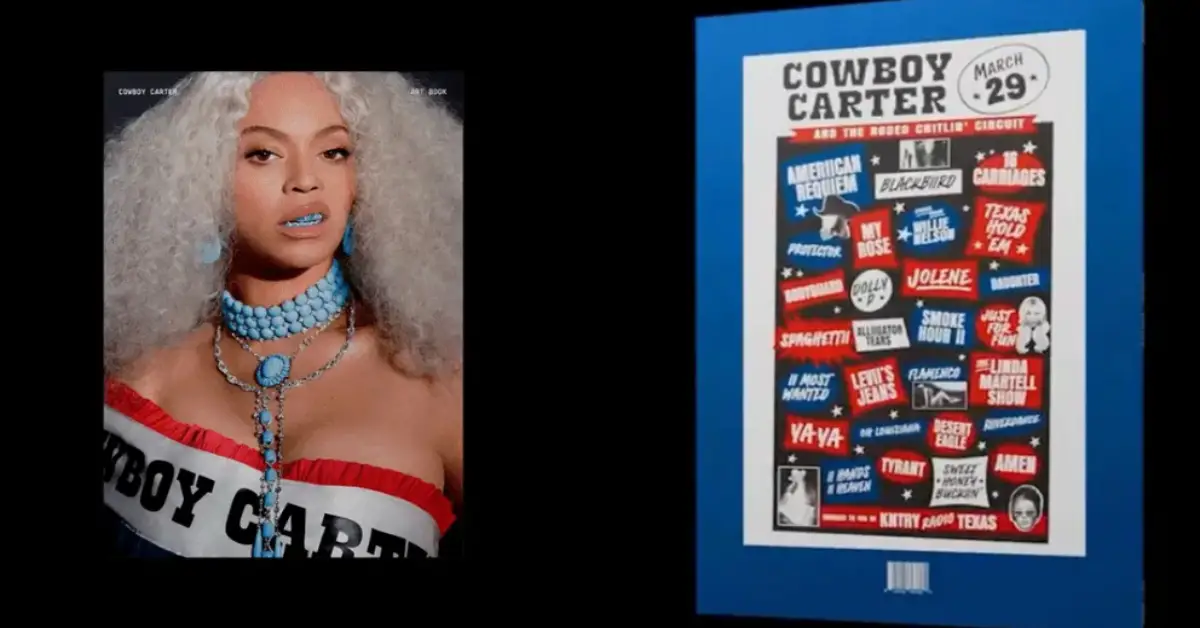
Western wear isn’t just back — it’s Black.
It’s clear that cowboy culture has giddied up into the mainstream with a new (and overdue) sense of pride. But before the fringe jackets and bolo ties became rodeo and concert essentials, the Black cowboy was already at the heart of the story — whether America chooses to celebrate it or not.
Today, with TikTok line dance tutorials trending under hashtags like #BootsOnTheGround and satin-lined cowboy hats flying off the shelves, the Beyoncé effect (thanks, Cowboy Carter) is undeniable.
Yet, what’s happening is bigger than fashion. It’s about reclaiming a narrative — one rooted in grit, glamour, and generations of erasure.
With Beyoncé’s Cowboy Carter era fueling a Western fashion renaissance, fans are pulling out their boots, satin-lined cowboy hats, and rhinestones. Black cowboys were already the original trailblazers, but now, Beyoncé’s influence is helping to reclaim a rich history, one rooted in resilience, rhythm, and undeniable style.
The Black Cowboy: America’s Original Trailblazer
Let’s get this straight: cowboys were never just white men with six-shooters and Marlboro cigarettes.
According to the Smithsonian’s National Museum of African American History and Culture, one in four post-Civil War cowboys was Black. Figures like Nat Love and Bill Pickett were pivotal in shaping the image of the cowboy — breaking horses, riding the roughest trails, and starring in early rodeos — even as popular culture whitewashed them out of Western lore.

We learned from Jordan Peele’s 2022 film “Nope” that the first moving image ever recorded featured a Black man riding a horse. That visual — and the family reclaiming it onscreen — wasn’t a fictional flex. It was a fact.
Cinema has slowly started tipping its hat back to these unsung icons. From Idris Elba’s portrayals in “Concrete Cowboy” and “The Harder They Fall” to Peele’s “Nope,” the modern Black Western is riding tall again. Now, Beyoncé’s Cowboy Carter is helping amplify it to the mainstream.
Beyoncé’s Cowboy Carter Era: Saddle Up, See Your People
If Beyoncé’s Renaissance taught us to free ourselves, Cowboy Carter reminds us to ground ourselves in our roots, in our history, and in our own communities.
During her Renaissance tour, posters encouraged fans to “see your own people,” a phrase that initially sparked questions outside Black spaces. However, Beyoncé’s next act, steeped in the legacy of the Black Chitlin’ Circuit — a network of venues where Black performers thrived amid segregation — was crystal clear: support Black artistry and culture.
According to the National Museum of African American History and Culture, the Chitlin’ Circuit provided a crucial stage for Black musicians, comedians, and dancers during the Jim Crow era, offering spaces where Black talent could thrive despite exclusion from white-dominated venues. Beyoncé’s nod to that tradition through her Cowboy Carter tour highlights a lineage of resilience that goes far beyond country music.
Her Cowboy Carter era is about more than aesthetics; it’s about rewriting narratives. After facing backlash following her 2016 CMA performance of “Daddy Lessons,” and critics questioning whether she belonged in country music, Beyoncé addresses this exclusion directly in the song “AMERIICAN REQUIEM,”:
“Used to say I spoke ‘too country’ / Then the rejection came, said I wasn’t country ’nough.”


