
The best mattress toppers in the UK for a more comfortable night’s sleep, tested
Whether you’re looking for memory foam, wool, cooling or firm, we reveal the toppers we rate – and whether they can really rescue a bad mattress

A mattress topper is like a slice of cheese in a burger: not strictly necessary, but potentially transformative, especially if your bed has all the cosiness of stale bread. Strap a comfy topper on to a hard mattress, and it could transform the quality of your sleep at significantly less cost than a new mattress.
That’s the promise, anyway. In my neverending quest for a decent night’s kip, I slept on 13 bestselling toppers – not all at once, Princess and the Pea style, but for a few nights, each on top of a firm mattress. I was surprised to find so many topper types available, from thick slabs of memory foam to airy cloudbanks of hollowfibre, with some even containing springs.
Most of my test toppers went to charity straight after testing, but one improved my sleep so much that I hung on to it for weeks like a teenager refusing to acknowledge that the alarm went off hours ago. Here, I’ll reveal which topper turned me into a duvet-hugger and which one I kicked out of bed at 4am.
Current discounts
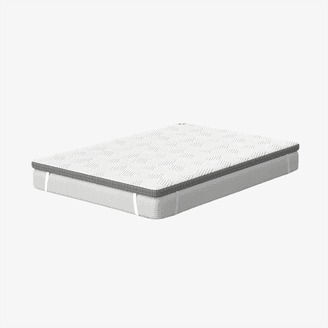
The Simba Hybrid Topper is essentially a thin hybrid mattress, and is priced as such. Thankfully, there’s a 15% Black Friday discount to be had.
If your mattress just needs a little extra cushioning, the budget-friendly Silentnight Airmax 1000 is now £8 off.
For those seeking pressure relief without the risk of overheating, Panda is offering a £20.99 discount on its cooling bamboo topper.
At a glance
- Best mattress topper overall
SimbaHybrid Topper (double)£296.95 at Simba - Best budget mattress topper
SilentnightAirmax 1000 (double)£38 at Silentnight - Best cooling mattress topper
PandaBamboo (double)£118.96 at Panda - Best firm mattress topper
OriginContour (double)£195 at Origin
Why you should trust me
I’ve spent three decades reviewing products from smartphones to hay fever remedies, so I’m naturally sceptical of manufacturers’ claims to improve our lives by buying their stuff. I also have a solid background in napping, insomnia and swearing at alarm clocks, so I welcomed the chance to sleep on the job – which has become something of a speciality for me at the Filter.
How I tested

Testing mattress toppers is not unlike testing mattresses – it just swallows up less space in your house – so I followed a similar methodology to that for the best mattresses. First, I sourced double-size toppers from the manufacturers (or from Mattress Online, in the case of the Silentnight), then allowed them to fully expand. Most of my test samples contain memory foam, so they needed a couple of days to reach the ideal consistency.
Then I sought feedback from people with assorted mattress preferences and sleep styles. I asked my dad (85), my niece (24), my sister and our husbands to join me for a topper-tasting session where we sat, laid down and rolled over on every test sample to compare them side by side. I collected everyone’s scores out of 10 for firmness, breathability and overall comfort, then worked out averages to draw up an initial ranking.
Next, ably assisted by my husband, Alan, I ran tests with weights, a heat pad, a thermometer and a glass of water to measure sinkage, temperature regulation and motion isolation. Mattress toppers vary less on these factors than full-size mattresses, but we still collected diverse and occasionally surprising data, especially on heat retention. For instance, when we warmed each topper’s surface to 35C using a microwavable heat pad, Panda’s memory foam topper cooled down even faster than those filled with microfibre or wool – despite containing a notoriously heat-hugging material. Clearly, foam technology is advancing, and we couldn’t make assumptions about toppers based simply on their lists of ingredients.
Then we went to sleep. Alan and I slept on the first seven toppers for at least two nights each in summer 2025, and then spent a week in winter sleeping on the Tempur One. In summer 2026, we spent up to two weeks each sleeping on five further toppers, including two models marketed as “cooling” toppers.
We attached the toppers to whichever mattress we were sleep-testing at the time. These included the firm Sealy Posturepedic Elevate Emin, the medium-firm Woolroom Standen Wool, and the medium Dreamcloud Hybrid. To ensure a fair comparison of the toppers’ tensions, we also tried each one on the floor, although for this part of the test we resisted the temptation to nod off.
I considered each topper’s environmental credentials, too. Mattress-makers are secretive about the lifecycles of their products, but I discovered what I could about the materials used, their manufacture and their potential for recycling.
No mattress toppers were harmed in the testing process, but I struggled to find takers for them at the local refuges and hardship organisations that have collected my test mattresses. So I donated them to a local charity that means a lot to me: Farplace, which raises money for animal rescue.
The best mattress toppers in 2026


For more, read our full Panda mattress topper review


The best of the rest


What you need to know

What’s the difference between a mattress topper and a mattress protector?
A mattress topper is a layer of foam or similar material, usually around 5-6cm thick, designed to add cushioning and comfort to a mattress that’s too hard. A mattress protector is more like a thick fitted sheet – often quilted, and sometimes waterproof – that helps to keep sweat, spills and dirt away from your mattress. A topper helps to protect your mattress from wear and tear, too, of course.
Will a mattress topper fix a bad mattress?
In most cases, no. If the mattress is “bad” because it’s too hard for your preference, then a mattress topper can fix it by adding a layer of cushioning. It will help prolong the mattress’s life, too. But if the mattress is saggy, torn or lumpy, the topper will simply follow the curve of its surface.
“Where a mattress has lost its support or doesn’t provide enough support for your body shape, a topper won’t solve the problem,” says Hannah Shore, head of sleep science at Mattress Online. “Ultimately, the topper will shape itself into those same lumps and bumps.”
Can a topper make my bed feel firmer?
All mattress toppers work best on a solid foundation. A firm topper, such as the Origin Contour, may briefly make you feel more supported if your mattress is too soft, but it’ll soon sink into the mattress and create an unstable, uneven surface. As a rule of thumb, lower layers should be firmer and upper layers should be softer.
Don’t be tempted to use a mattress topper on the floor, either, says Hannah Shore. “They’re designed to be used in conjunction with an actual mattress. A topper on the floor won’t give you the support and cushioning you need to get a good night’s sleep.”
What should I look for when buying a mattress topper?
That depends on why you want a topper. These bed-enhancers come in a surprisingly wide range of materials and tensions, each suited to different needs.
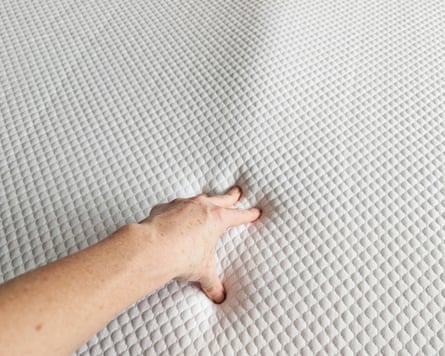
Your bed feels too hard: look for a soft topper, ideally made from memory foam. Brands including Tempur and Simba have their own names for memory foam, but it’s all similar stuff: high-viscosity foam that moulds around your body to provide support as well as plush cushioning. It softens over weeks and months of being slept on, especially when the weather’s warm.
You get too warm in bed: memory foam tends to trap heat, so hollowfibre or wool is traditionally a better choice if you tend to overheat at night. However, sleep brands are competing to devise breathable foam recipes such as Panda’s “HydroFoam”, whose open-cell design and “heat-sensitive micro gel” let the air circulate and draw heat away from your body as you sleep. This helped make the Panda Bamboo the best cooling topper in my test.
You have a bad back: firmer doesn’t always mean better when you suffer from back pain, so find a topper that adds just enough softness to your mattress to let your spine align. As explained in our guide to the best mattresses for back pain, an aligned spine is simply one that relaxes in a straight-ish line when you’re lying on a bed that’s neither too firm nor too soft. It’s the key to comfort by night and a pain-free back by day. “Medium-firm mattresses consistently come out on top in research into back pain,” says osteopath and sports coach Ian Greaves. “Comfort matters as much as support.”
You suffer aches and pains: orthopaedic sleeping surfaces can also feel too firm if you suffer from pain in pressure points such as hips and shoulders, especially if you’re used to a softer surface. I love a firm mattress, but my ribs and shoulders are far happier with a thin, soft comfort layer on top of it, especially when I sleep on my side. The pressure relief of a memory foam topper is also great for soothing painful joints and other musculoskeletal maladies.
You’re a side sleeper: when you lie on your side, your pressure points (knees, hips, shoulders) dig into your sleeping surface more than when you lie on your back – or at least, they want to. If your bed is too firm, these bony bits of you sit too high and throw your spine out of alignment. Don’t switch to too soft a surface, though, because then your bum will sink too far and take your spine with it. You may also find it harder to move around and change positions on a softer surface, so go for medium-firm.
You’re big or small: we live in a world made by and for average-sized people. Those of us who skew big or small have to find a workaround. I’m very short and don’t sink far enough into firm mattresses, so I need a softer topper to add a comfort layer. If you’re big, a firm topper can help make a mattress feel more supportive, but only as a short-term fix. In the longer term you may need to invest in a firmer mattress.
You share your bed with a fidget: memory foam is brilliant for absorbing the movement of a sleeping partner, so you’re less disturbed by their tossing and turning.
You suffer from allergies: wool is naturally hypoallergenic and also excels at temperature regulation, but it’s not vegan and is usually dry clean only. As a habitual morning sneezer, I’ve had excellent results with polyester hollowfibre and microfibre toppers that act as a barrier to allergens such as dust mites in my mattress. These toppers are also the easiest to wash in the machine.
What type of mattress topper should I buy?
Mattress toppers all do much the same thing – add cushioning to a mattress that’s too firm or has seen better days – but the materials they contain have a significant impact on how well they cushion you, how cool they keep you, and how long they last.
Memory foam: high-viscosity synthetic foam is popular in toppers for the same reason that it’s popular as a comfort layer in the best mattresses: it adds adaptive softness and motion isolation. That makes it ideal as a topper if your mattress is too firm. A memory foam topper can last for many years (Tempur’s even has a 10-year guarantee). It tends to be at the top end of the price scale, though, and you can’t stick the whole thing in the washing machine like a microfibre topper.
Hybrid: the best topper I tested, from Simba, is a hybrid of springs and memory foam, like a hybrid mattress. The springs can make the topper feel more breathable and responsive than foam alone, and help it spring back faster after being pressed. Hybrid toppers are rare, though, and I found that the springs made Simba’s topper harder to handle and store than the all-foam Tempur.
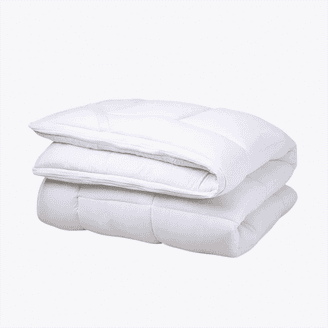
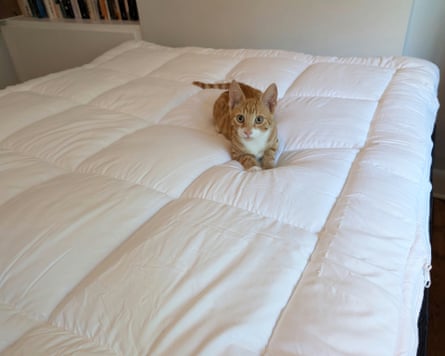
Synthetic fibre: microfibre and hollowfibre toppers like the Silentnight Airmax 1000 are a low-cost way to add a protective comfort layer to your mattress. They’re also easy to wash and store, and can be surprisingly breathable despite containing no natural fibres. The main downside, in my experience, is that they don’t retain their support for long (it’s not unlike using a duvet as a mattress topper), and they don’t have the longevity of a memory foam or wool topper.
Wool: a wool mattress topper like Woolroom’s, or like the wool layer in the Simba Hybrid Pro mattress, adds a satisfying degree of softness without making you feel like you’re sinking, and it doesn’t continue to soften over time like foam can. Natural fibres such as wool, silk and cotton are also great temperature regulators, helping you stay cool in summer and warm in winter. Wool, unlike foam, is safe to use with an electric blanket, so it’d be my choice of mattress topper to use on the coldest nights.
Down: a luxurious down mattress topper adds more softness than wool, transforming your mattress into a sumptuous feather bed, although it doesn’t have the adaptive squishiness and support of foam. Its excellent temperature control can bring relief from night sweats or on warm nights, but it can’t actively cool you down and usually needs professional laundering.
Can I wash a mattress topper?
The Woolroom topper and Otty cover in my test are dry clean only, an annoying barrier to keeping them fresh and healthy. You can’t wash or dry clean memory foam, but memory foam toppers usually have removable fabric covers that you can wash in the machine at 30C, 40C or even 60C. With polyester hollowfibre and microfibre toppers, you can often put the whole top section in the machine, although it’ll take a bit longer to dry – much like washing a summer duvet. A heated clothes airer will help when the sun doesn’t shine.
What else should I bear in mind?
Get the right size topper for your mattress: don’t try to save a few pounds by buying a double-size topper for a king-size mattress. The topper won’t attach securely, so it will move around while you turn in the night and could even slide off the bed.
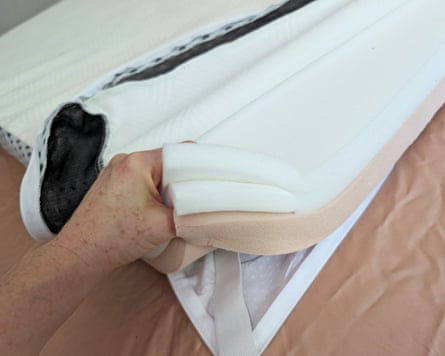
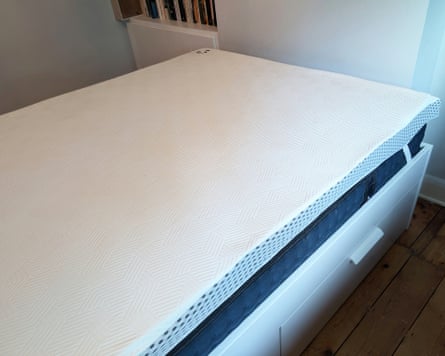
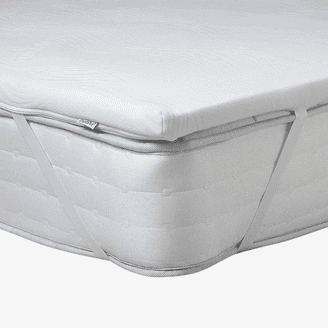
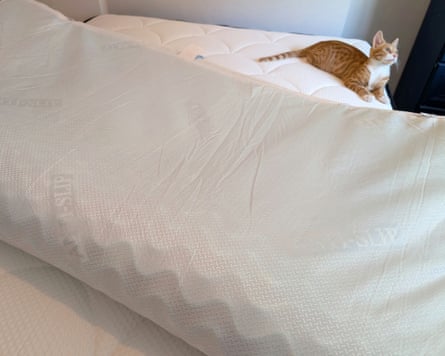
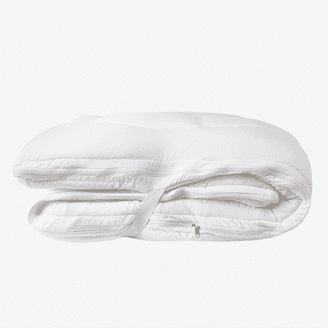
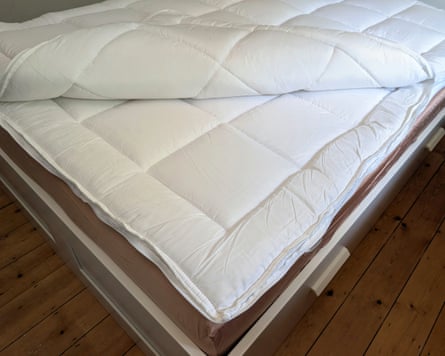
Mattresses vary in depth, of course, so check the size of the topper’s straps if you can when buying one. Of the toppers on test, the adjustable straps on the Panda were the best, securing tightly to any depth of mattress, while the Origin’s were particularly small. A non-slip base like the ones on the Otty, Simba and Panda will help keep the topper in place. The double-sided Ikea has no straps or non-slip base at all, so it will need to be secured with a tight fitted sheet.
All but the thinnest toppers will add a couple of inches of height to your mattress, so your sheets may struggle to fit. You can buy extra deep fitted sheets or even adjustable ones like the Pull Me Tight toggled fitted sheet (from £15 at Dunelm). Memory foam toppers add several kilos to the weight of your mattress too, so changing sheets becomes slightly harder work. Some foam toppers also shouldn’t be used with electric blankets.
Mattress toppers don’t typically come with the generous free trial periods and warranties that mattresses do, but some can be returned for a refund if you don’t get on with them. Check this before you buy. A good mattress topper will last three to five years if you take good care of it by using a mattress protector and rotating it regularly.
For more:
The best mattresses for back pain
The best mattresses for side sleepers
The best pillows
The best duvets for every season
Based in the US? Read our guide to the best mattress toppers in the US
Jane Hoskyn is a features journalist and WFH pioneer with three decades of experience in rearranging bookshelves and “testing” coffee machines while deadlines loom. Her work has made her a low-key expert in all manner of consumables, from sports watches to solar panels. She would always rather be in the woods
Originally published by theguardian.com. Syndicated material does not necessarily reflect the views of GQ British Lifestyle.