

The TNR Wealth Poll: Americans Say Spread the Dough
The demographic breakdown on these questions is revealing, particularly when it comes to partisan affiliation: 56 percent of Republicans think the top 0.1 percent should own 20 percent or more of all wealth in the United States; 25 percent of them think the top 0.1 percent should own 40 percent or more. As for the top 1 percent, one in five Republicans think the group should own 50 percent or more of total wealth. In short, a lot of Republicans—even in this allegedly populist MAGA era—still believe that the rich should be allowed to accrue as much wealth as they please. Among Democrats, 54 percent of respondents said the top 0.1 percent should own less than 10 percent of the total wealth, while 47 percent said the same about the top 1 percent. These numbers roughly invert when it pertains to the bottom 50 percent, which 49 percent of Democrats think should own 50 percent or more of total wealth, versus just 28 percent of Republicans. This is consistent with other polls that show Democrats are more concerned about income inequality than Republicans are. But here’s an interesting twist from our poll: Independents proved even more distributionist than Democrats on this question, with 53 percent saying the bottom 50 percent should own 50 percent or more of total wealth.
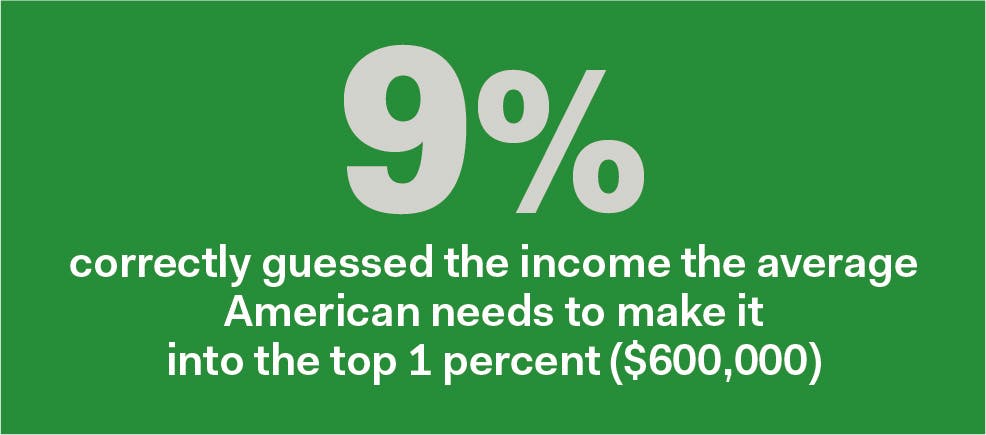
Voters are on less steady ground when asked about the top 10 percent. Though 68 percent of respondents correctly guessed that the average American needs around $200,000 to make it into this group, only 31 percent rightly responded that the top 10 percent owns 36 percent of all wealth. Similarly, they disagree over how much wealth this group should own, as 63 percent answered somewhere between 10 and 30 percent. Meanwhile, respondents overestimated how much money the average American would need to earn to make it into the top 1 percent, with 55 percent choosing around $800,000; only 9 percent guessed the correct answer of $600,000.
Ganesh noted that, in contrast to voters’ responses about the top 0.1 percent and the 1 percent, they were more ambivalent about the 10 percent. “A lot of the focus when it comes to income inequality is really the people at the very top, the superrich, whereas the top 10 percent are a little harder for people to conceptualize. Somebody who’s worth over two million, it could be your next-door neighbor who is a small-business owner.”
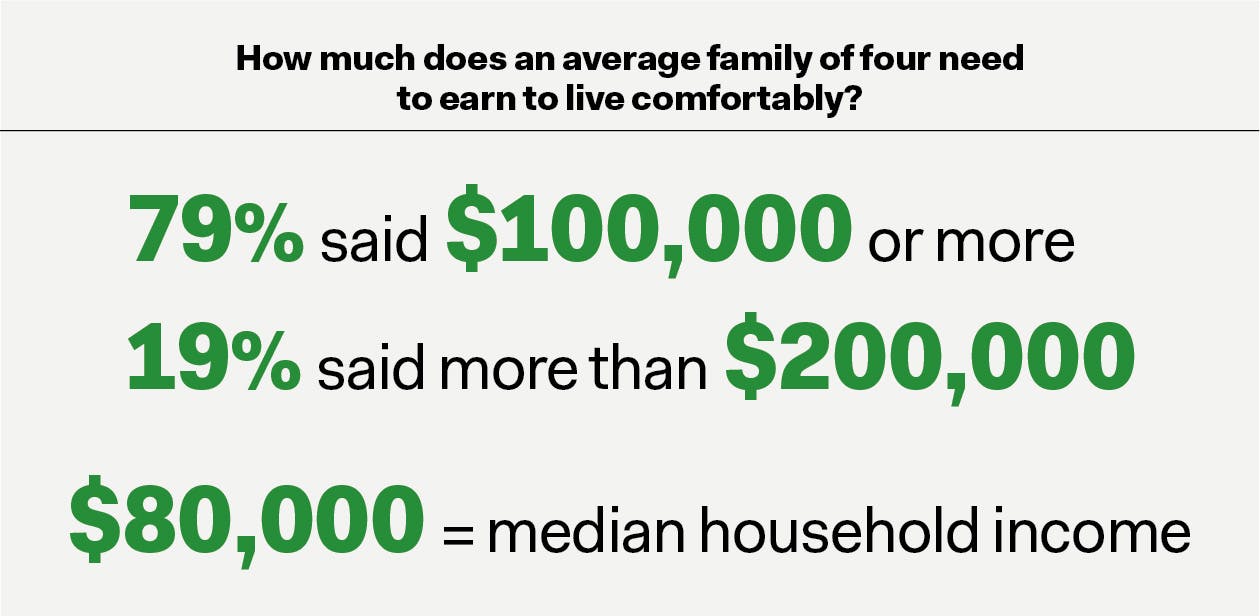
What’s clear, though, is that voters feel economically squeezed. Asked how much an average family of four needs to earn per year to live comfortably, 79 percent said $100,000 or more—and 19 percent said more than $200,000. Given that, according to the most recent U.S. Census data, the median household income in America is $80,000, this tells us that many if not most voters do not feel that they’re living comfortably.