‘The view from the Mournes was CS Lewis’s idea of Narnia’: how Northern Ireland inspired a magical kingdom
Ahead of Netflix’s Chronicles of Narnia dropping early next year, we discover the fantastical landscapes that fired the Belfast-born author’s imagination
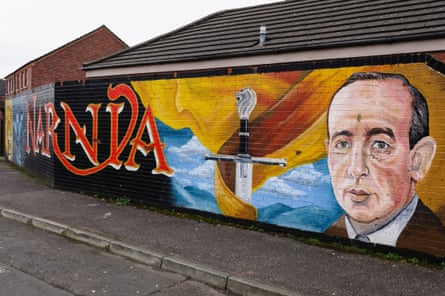
On the gable walls of the tough, working-class streets of east Belfast, the mystical beasts of Narnia vie for brick space with balaclava-wearing loyalists. The murals of the city have long projected the power of paramilitaries, but in recent years they have also begun to reflect the more positive contributions made by other local people, including the author CS Lewis.
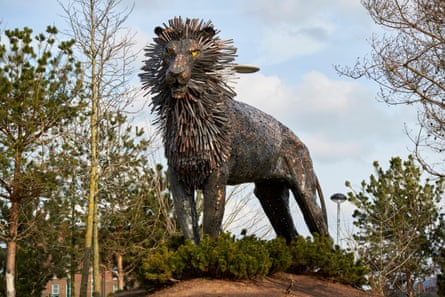
Lewis was born in Dundela in 1898 in an attractive terrace house that has sadly since been demolished to be replaced by rather unattractive flats. But elsewhere in this part of the city, the Lewis connection is being built on and celebrated. CS Lewis Square is in the Holywood Arches neighbourhood and has a short walking trail featuring metal sculptures of Mr and Mrs Beaver, Mr Tumnus and other beloved characters from The Chronicles of Narnia. The centrepiece is a gigantic Aslan, towering over all from atop a circular mound.
About 15 minutes’ walk away, St Mark’s church on the Holywood Road is the proud custodian of a much smaller lion that may have inspired Lewis’s creation of Aslan. His grandfather, the Rev Thomas Hamilton, ministered here, living in the rectory for 13 years, and his front door was decorated with a beautiful brass lion’s head doorknob. The original has been removed for safekeeping, but an exact replica attracts thousands of Lewis pilgrims each year.
Leafy Circular Road, half a mile away, is where the Lewis family moved in 1905 to a large, redbrick house that, back then, was on the outskirts of the city. The road has since been subsumed by the growth of the town, but remains the realm of the prosperous. The house, called Little Lea, is privately owned, but can be seen from the iron gates at the end of the drive.
“To a child, it seemed less like a house than a city,” Lewis wrote of the family home in his autobiography, Surprised By Joy. “I am a product of long corridors, empty sunlit rooms, upstairs indoor silences, attics explored in solitude.”
Little Lea appears in the opening two Narnia books, first when a boy exploring a large attic in The Magician’s Nephew finds a way into another world, and then in The Lion, the Witch and the Wardrobe when a game of hide and seek leads a group of inquisitive children to that same magical world a generation later.
Although it was close to east Belfast’s industrial heartland, it was also just a fence clamber away from the fields, hills and woodland glens that fringed the city like a vast adventure playground. As children, Lewis and his elder brother Warnie seem to have had a freedom to wander that would terrify modern parents. They would trek for hours up into the hills between Belfast and Strangford Lough, and travelling that way today still evokes a sense of romantic escapism.
The Belmont Road takes you up, climbing dramatically out of the city and into the expansive high ground that towers over Belfast, Bangor and Newtownards. There are many viewpoints up here. Lewis didn’t record the exact spot that inspired the following ethereal description of the views he loved, but for this writer, the crags of the Whitespots country park on the hill above Newtownards are a pretty good bet, especially as this place also chimes loudly with his descriptions of the stone table on which Aslan was sacrificed in The Lion, the Witch and the Wardrobe.
“Looking south with a little east in it, a different world,” he writes in Surprised By Joy. “And having seen it, blame me if you can for being a romantic. For here is the thing itself, utterly irresistible, the way to the world’s end, the land of longing, the breaking and blessing of hearts. You are looking across … the plain of Down, and seeing beyond it the Mourne Mountains.”
skip past newsletter promotion
after newsletter promotion
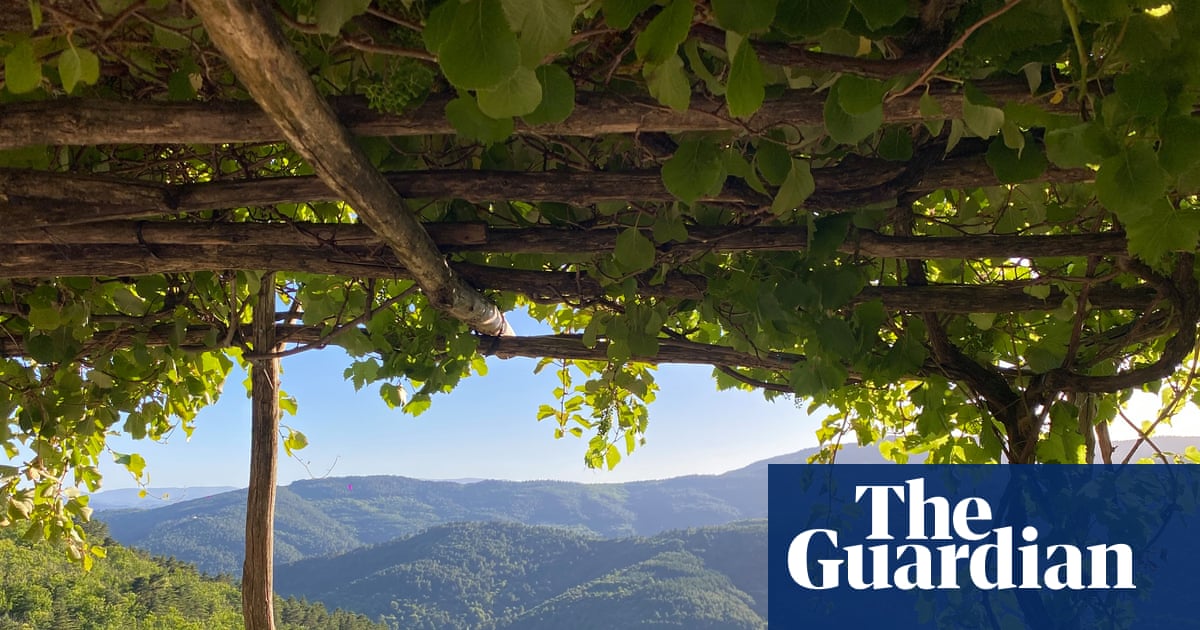
Lewis once told Warnie that the view from the Mournes above Rostrevor looking down over Carlingford Lough was his idea of Narnia. The statement is now stencilled on a bench at a viewpoint in the town’s Kilbroney forest park. Sitting there, in the majesty of this area, it is easy to imagine, as Lewis later wrote in an essay, that a “giant might raise his head over the next ridge”.
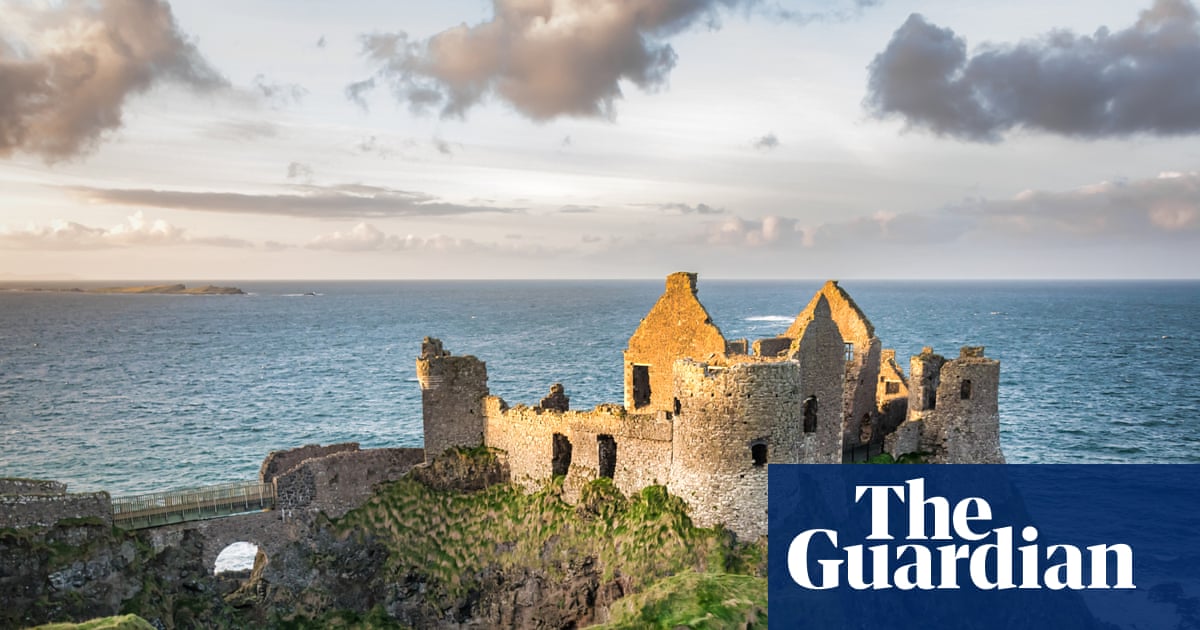
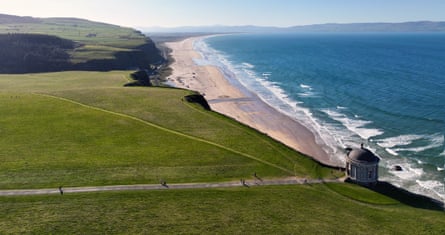
Rostrevor is an hour’s drive south of Belfast, and an hour’s drive in the other direction will take you to the equally spectacular north coast, where Lewis holidayed with his mother as a young child. There’s an ongoing debate among Lewis scholars and his many passionate fans about whether it was Dunluce Castle or Downhill Demesne that inspired Cair Paravel, the castle capital of Narnia.
The ruins of Dunluce perch precipitously on the coast east of Portrush, while Downhill Demesne, near Castlerock, contains what remains of the old Downhill House but also the iconic Mussenden Temple, which much better fits the description of Cair Paravel looking “like a great star resting on the seashore”.
Lewis was writing his autobiography at the same time he was producing the seven Chronicles of Narnia. The experiences and landscapes he was remembering for his memoir very likely bled into the creation of his magical kingdom. And so the heavenly, pastoral landscapes of Narnia on the murals of east Belfast might feel familiar even to those locals who haven’t read the books or watched the screen adaptations. The wholesome images of his imagination being sandwiched between paintings glorifying terrorism is an unusual setting for a tribute to the world’s most famous Christian apologist, but perhaps in Belfast, as in Narnia, good will win in the end.
The first of Netflix’s new The Chronicles Of Narnia adaptations, Narnia: The Magician’s Nephew, will be released in cinemas on 12 February 2027 and on Netflix on 2 April. Surprised by Joy by CS Lewis © 1955 CS Lewis Pte Ltd, The Lion, The Witch and The Wardrobe by CS Lewis © 1950 CS Lewis Pte Ltd
Originally published by theguardian.com. Syndicated material does not necessarily reflect the views of GQ British Lifestyle.