
Why queer horror fans are obsessed with Leviticus
Adrian Chiarella’s cult horror turns teenage desire into something deadly – here, the director talks to Nick Chen about romance, real-world homophobia and why fans keep coming back for more
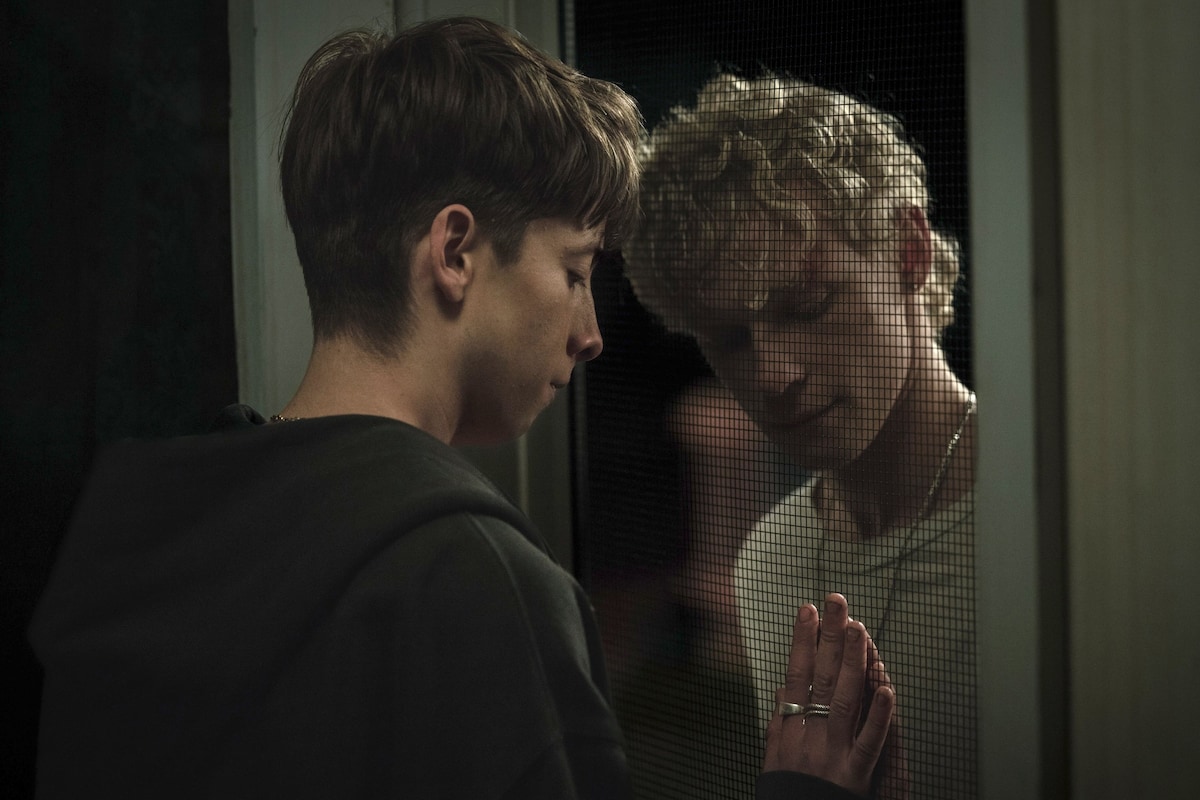
If your crush is going to be brutally murdered by an inexplicable, shapeshifting monster that imitates the person they most desire, then take solace if it looks like you. In Leviticus, a queer, coming-of-age horror from Australian writer-director Adrian Chiarella, that is indeed the height of romance: two teenage boys discover their love is true when they witness the familiar form of the blood-thirsty, knife-wielding demon that seeks to slaughter them through seduction.
In a rural part of Melbourne, Naim (Joe Bird) is a closeted, awkward kid with eyes on the outgoing, vest-wearing Ryan (Stacy Clausen). Raised by a religious, homophobic mother (Mia Waskikowsa) who regularly drags him to church, Naim has enough issues for Leviticus to work as a gripping teen drama on its own. After spotting Ryan making out with the local pastor’s son, Hunter, Naim retaliates by reporting their sexuality to the duo’s parents; the resulting gay exorcism sends Ryan and Hunter into convulsions on the floor. When Naim later spots Ryan being strangled by an invisible figure, the pair work out the rules of a curse set upon Ryan: the monster emulates your number-one crush, no one else can spot it, and it’s thus ironically safer to spend all your time with your romantic target.
“It all came from my own dreams and nightmares of experiencing real-world homophobia as a teenager,” Chiarella tells me in a London hotel in early September. “Horror movies were so important to me. I’ve spoken to other LGBTQ+ people who also turned to horror movies for comfort.”
Chiarella is sat next to Bird, an 18-year-old Australian actor who co-starred as the younger brother in Talk to Me. It’s thus a teen movie starring teen actors – a fact confirmed when Bird refers to The Cure, the band on my T-shirt, as a group he discovered through Olivia Rodrigo. “When I read the script for the first time, I saw in the first five pages that they kiss,” says Bird. “I was like: this is a queer story. It’s a beautiful film that’s needed in the world right now.”
As in It Follows, the monster in Leviticus is treated as an unstoppable force, ensuring the drama is propulsive and also symbolic: like teenage desires, there’s no point denying them. The metaphor also touches on the lack of allies around the protagonists, given how friends and family never help the duo. Other viewers, though, might perceive the film as a comment on co-dependency. “The monster also reflects how present homophobia is in today’s society,” says Bird. “When these boys ask for help, they’re told it’s not real. The violence never stops.”
Further nuance is in the character of Arlene, a mother who evidently cares for Naim but can’t overcome her religious beliefs. Wasikowska’s character, then, is written as a three-dimensional grieving widow who sincerely believes that Naim is better off with the deadly curse. “I wanted to show that it’ll take many years of healing for her to change her mind,” says Chiarella. “You see films that engage with these themes, and the moment of redemption with the parents happens too quickly.”
“We’ve met people who’ve seen this film 20 times. What brings them back is the love story”
Above all, Leviticus stands out in the genre for a unique take on jump scares: every scary moment is potentially a rom-com set-piece. Once Naim receives the curse, the viewer shares in his permanent delight and terror whenever Ryan appears. Is this an unstoppable supernatural entity claiming to be Ryan, or the teenage fantasy of a crush literally crawling through your window at night, begging to hide in your bed? When disguised as Ryan, the monster even tricks Naim by slowly kissing him for a few seconds before the caressing hands slide towards the neck.
“Me and Stacy had to work with an intimacy coordinator to figure out how the monster will latch onto desire,” says Bird. “It’s like a predator luring in its prey before it pounces.” Is Naim pleased that Ryan sees him in the monster, and not Hunter? “I’m sure the Leviticus fandom has noticed that Naim and Ryan share a glance at each other when Shannon Berry’s character says it looks like the person you’re most into. Me and Stacy are definitely happy it was reciprocated.”
When Bird refers to the Leviticus fandom, he means it. Ever since its Sundance premiere, the film has developed a cult following, especially amongst young queer viewers. Repeat audiences, they’ve noticed, have latched onto the story’s romantic angle: it’s literally two gay kids risking their lives for each other. “We’ve met people who’ve seen it 20 times,” says Chiarella. “What brings them back is the love story.”
“We met someone in Sydney who’s seen it 28 times!” adds Bird. “I constantly say to people it’s more of a love story than a horror film.”

Born in Australia, Chiarella’s family background is half-Italian, half-Chinese. Growing up, he noticed that if he told a joke, it might not appeal to all of his relatives. “But if I saw something frightening on the way home from school, it’d hook and terrify any member of my family, whether they’re from Malaysia, China, Italy, or Britain,” says the director. “It was instilled in me from a young age that horror movies will travel around the world.” So do all his relatives appreciate Leviticus? “Some more than others.”
“I’m begging him to do a comedy next,” says Bird, leaning forward. “The world needs to know that he’s one of the funniest people I’ve ever met.”
Chiarella hasn’t written a sequel for Leviticus, but knows that people keep asking him for one, and he wouldn’t object if another filmmaker wanted to have a go. In a few hours, he might be asked again, as he and Bird are doing a post-screening Q&A. It means, once again, walking in front of cinemagoers as Frank Ocean plays over the end credits.
“Me and Adrian have seen the last five minutes of the film about 60 times because of Q&As,” says Bird. “I love ‘Self Control’, and it always makes me cry. I’m always about to go on stage, and I’m wiping away my tears.”
Leviticus is out in UK cinemas now
Originally published by dazeddigital.com. Syndicated material does not necessarily reflect the views of GQ British Lifestyle.


