
10 Best Stephen King Endings, Ranked
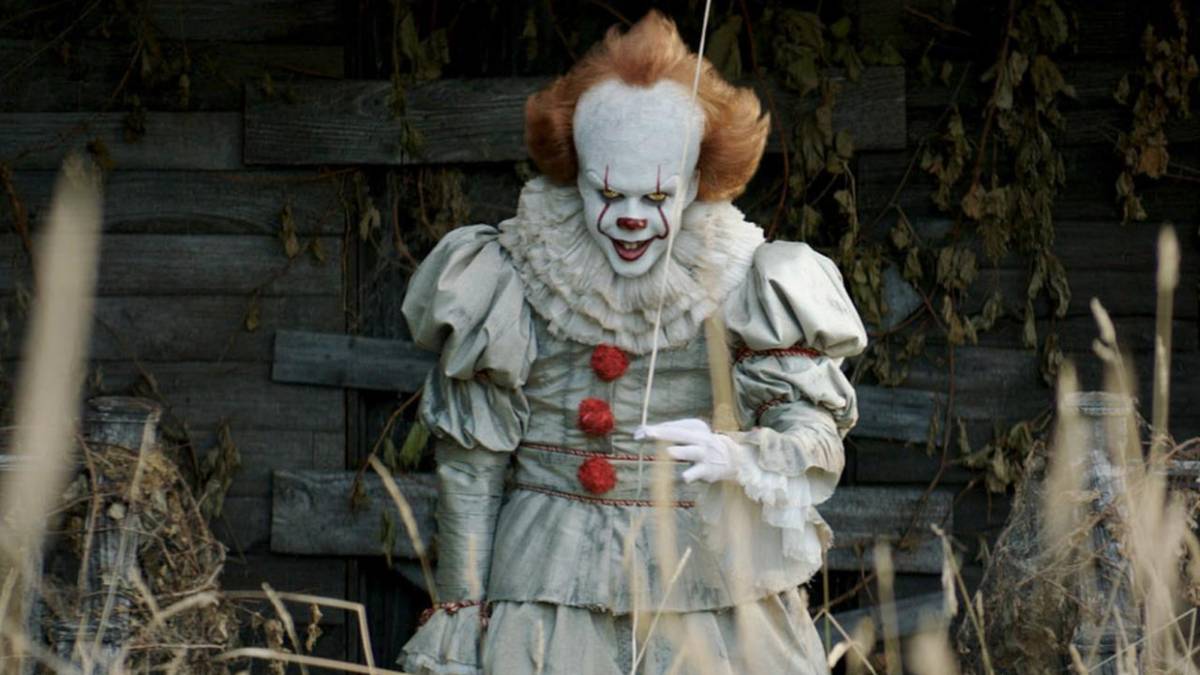
There’s a level of infamy attached to Stephen King and the way he chooses to end some of his stories. Books of his like The Outsider and Desperation start stronger than they conclude, but are still worth reading even if the endings disappoint. Then there are the likes of Lisey’s Story and The Tommyknockers, which are flawed throughout, and so maybe it’s less surprising that they don’t end in particularly strong ways.
These are just a few examples, but it’s possible to go on much further, because the endings that are seen either by all or some as disappointing, within King’s body of work, are – funnily enough – almost endless. So, to avoid any more negativity, why not look at some of Stephen King’s best endings? That’s what the following ranking intends to do, and will include some endings that aren’t loved by all, but were loved by the person writing this. Also, the following will include some inevitable spoilers for the titles being discussed, but that’s unavoidable here.
10
'The Dead Zone' (1979)
Forget about the movie adaptation, even if it’s not terrible (more just a little disappointing), because the novel The Dead Zone is where it’s at. This one focuses on a man who is able to see glimpses of the future through the act of touching objects or people, and this ability ends up convincing him that a politician with aspirations of one day becoming President might well doom the world if he were to be elected.
The protagonist is pushed to act out desperately, going so far as to attempt to assassinate the politician, but he’s let off the hook, effectively, when the attempt is thwarted. But during said attempt, the politician dooms his career anyway by trying to use a child as a human shield. There’s a sacrifice done here, and achieved in a way where the main character doesn’t quite have to kill someone in cold blood, but it manages to avoid feeling contrived. Also, there’s an undeniable catharsis in a villain this terrible getting his comeuppance.
9
'The Stand' (1978)
Plenty of people will tell you The Stand had a baffling and kind of silly ending, but… what if they were wrong? Or, what if, from a certain point of view, the ending works? Actually, there’s no convincing anyone here, because The Stand is gargantuan, and ending a book this long in a way that makes everyone happy feels particularly difficult, as a result.
Plenty of The Stand proves moving, especially the last stretch of the book that's devoted to the survivors of all the violence starting to move on.
Maybe it’s the case that reading The Stand, after hearing about the divisive ending of The Stand, results in a feeling of: “Huh, that wasn’t nearly as bad as I was fearing.” After the opening act devoted to the world ending and a second act about rebuilding (which ends with an act of destruction and death), the third act becomes about a battle between good and evil for the fate of the world, or what’s left of it. And you don’t really get a big battle, but things do build well and there is a definite conclusion to the conflict… it’s just done a little oddly. Yet plenty of it’s still moving, especially concerning the last stretch of the book devoted to the survivors of all the violence starting to move on, and then the uncut/revised version of The Stand also has a pretty striking, effective, and ominous epilogue, too.
8
'Revival' (2014)
Revival is one of the rare Stephen King books that ends better than it begins, though it still gets off to a pretty good start, all things considered. Maybe that’s to do with it being a slow burn, as Jamie, the main character, is initially a kid who meets a new minister, but then tragedy strikes the minister and his family. Jamie grows up, and starts having to deal with his own problems, but then reunites with the minister and finds the man has become obsessed with the afterlife.
There are attempts to reconnect with the dead in a way that might recall another Stephen King book about pets and cemeteries, but there are novel ways Revival finds to get dark. The ending here is genuinely one of the scariest things Stephen King has written, to the point where even though Revival was written quite recently, it feels like the most effective parts might well have been plucked out of the 1970s or ‘80s; the time when King seemed most proficient at writing full-on nightmare fuel.
7
'The Shining' (1977)
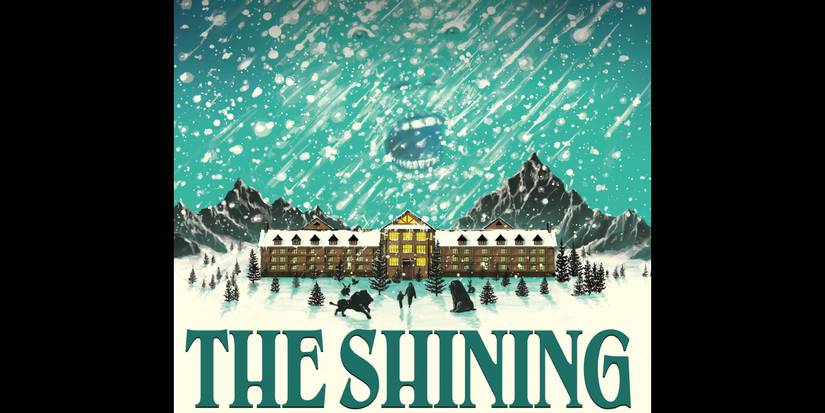
Since The Shining is a pretty contained story all in all, with one main setting and only a few key characters, maybe it was technically easier to conclude than something like The Stand. Still, there was always the potential to disappoint, or fizzle out a little, but it doesn’t happen here, since everything that was built toward slowly but surely throughout the book eventually explodes near the end.
And hey, there’s even a literal explosion, which is cool, but not everything. There are more complex emotions attached to Jack’s fate here, compared to the Stanley Kubrick film adaptation, and a sense of recovery and moving on is explored through the book’s epilogue. It’s about as happy an ending as a book as dark as The Shining can have, feeling well-earned and moving, rather than coming too close to feeling sappy or otherwise convenient.
6
'Cujo' (1981)
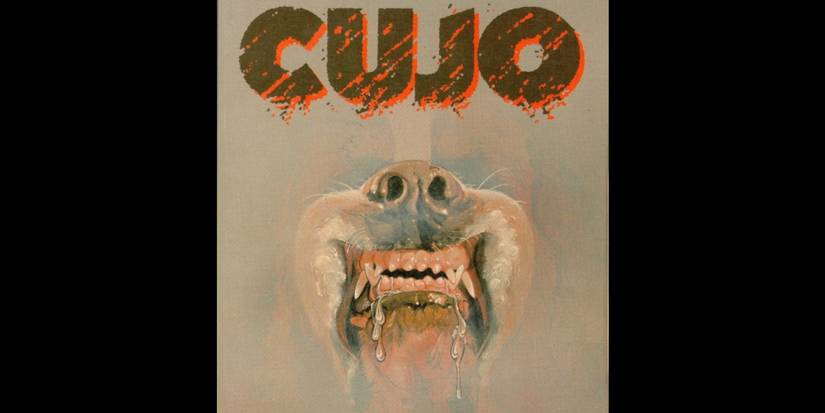
There’s a relentlessness to Cujo that partly comes about because the book doesn’t have any chapters. When King was asked about this choice, he stated: “I wanted the book to feel like a brick that was heaved through your window at you.” And like, mission accomplished? Because Cujo does hit pretty hard, since once the titular dog contracts rabies, and all his potential victims have been established, it’s non-stop tension and unease.
Also, without any supernatural element, Cujo manages to be one of the scarier Stephen King stories for anyone who feels that having ghosts, monsters, or demons of any kind in a horror story creates distance between them and the story, and with it, an accompanying sense of relief. The terror keeps going right until the end, as well, since the most significant character to die as a result of the book’s events is a four-year-old kid, and right near the end of the story, too. King was not messing around.
5
'The Dark Tower VII: The Dark Tower' (2004)
If you didn’t like The Stand being included in a ranking of “Best Stephen King Endings,” then you might also object to seeing The Dark Tower VII: The Dark Tower here. This had to end the same way any novel ends, sure, but it also had to conclude a seven-book-long series that had been published over the course of more than 20 years. In that sense, it was like a series finale, while all the other books in The Dark Tower series just had to worry about being “season finales” in their final chapters.
So, the whole book works as an ending to the series, with the stakes being super high and the deaths being frequent and genuinely tragic at times, while the final stretch of the seventh Dark Tower book takes some massive risks and even allows the reader the choice of when to stop reading. This is in line with how meta the series gets with its last few books, and then the ending finds a simultaneously clever and head-scratching way to loop back to the start of the first Dark Tower book. It’s a lot to think about and feel all at once, but it’s striking as a grand finale, and for better or worse, you're unlikely to ever forget it.
4
'It' (1986)
There are two main stories being told in It, and both have to be concluded, so that’s not as many as needed to be wrapped up at the end of The Dark Tower series, but still. Unlike in the 2017 and 2019 adaptations, though, both stories in It are told simultaneously, with the characters as kids and adults (battling the same foe on both occasions), and the lengthy finale here cuts between the two timelines seamlessly.
It's an approach that shouldn’t work, but does, and while the final act of the book does admittedly contain one of the most infamous sequences in any Stephen King story, it’s still an impressive ending for how weird, expansive, and emotionally adventurous it gets. It does an overwhelming number of things throughout its lengthy duration, and then somehow, all those many things are brought together in a largely satisfying way by the end.
3
'Pet Sematary' (1983)
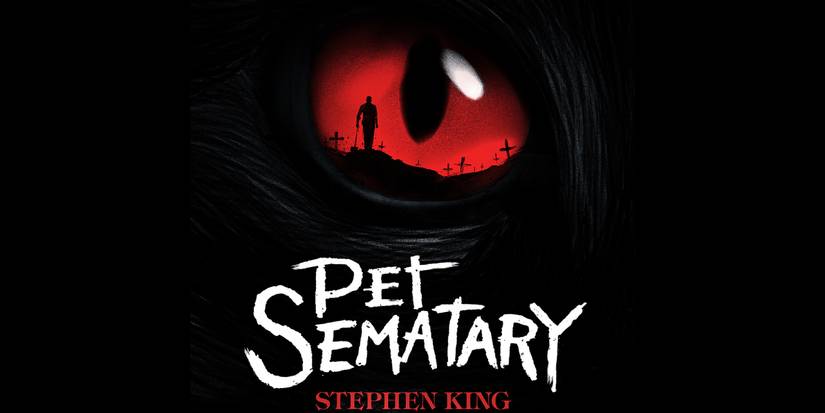
Pet Sematary keeps the page count modest and the number of characters on the lower end of things, perhaps a little like The Shining, since the focus here is also on a family. They move to a new house that’s by a particularly dangerous highway, and also nearby is a cemetery that might well have the ability to bring those buried there back to life.
At first, Pet Sematary is about a cat that’s killed, buried, and then comes back to life, but the real drama comes about when the protagonist, Louis, loses one of his kids, decides to try and bring said kid back to life. There are consequences that are equal parts unnerving and tragic, and the emotionally brutal final stretch of Pet Sematary is all about exploring those consequences. It’s harrowing stuff, even compared to other horror stories that tackle grief.
2
'Misery' (1987)
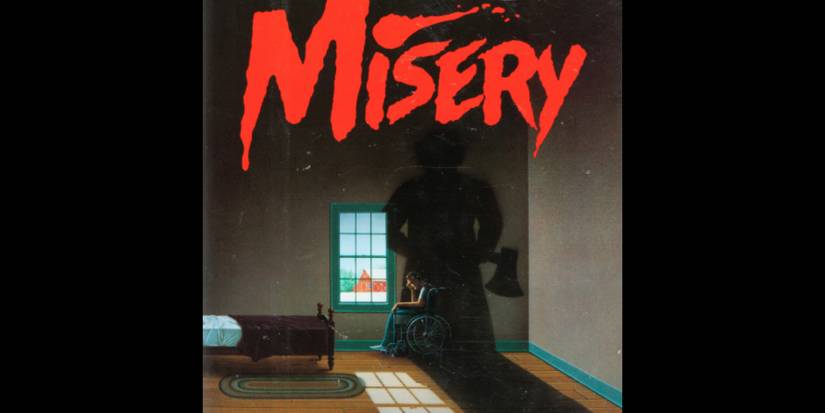
While Misery is not as miserable in its conclusion as Pet Sematary, there is still some unease present at the very end, even after the main character, writer Paul Sheldon, has escaped Annie Wilkes. The whole finale ends the extended period of imprisonment in a tense, violent, and cathartic manner, and it’s done in a way that makes sense, considering what transpired before and how the two central characters had been established.
The very ending, then, acknowledges how the trauma of the whole situation will never leave Paul entirely, but that’s only a little bitterness, if you'd even want to call the ending bittersweet. It wraps up in a similarly simple and moving way to The Shining, being mostly clean but not to a sappy or unrealistic extent; the acknowledgment of some lingering horrors alongside all the relief really sells the ending overall. That, and seeing Paul finally get the upper hand on Annie, of course.
1
'11/22/63' (2011)
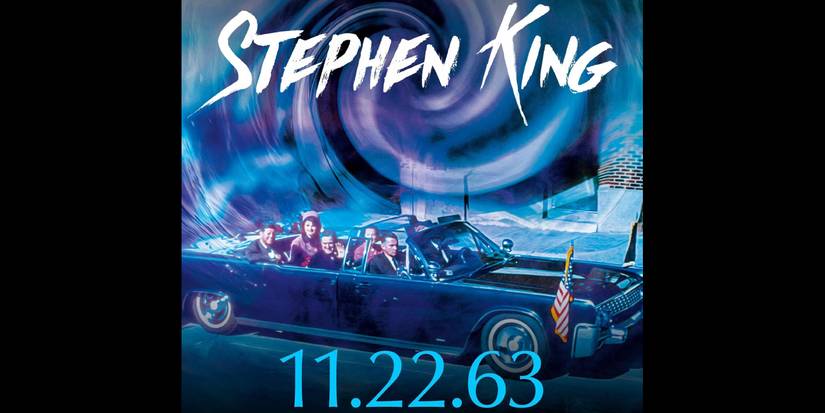
The premise of 11/22/63 is outlandish, but Stephen King makes it work. The protagonist is an English teacher named Jake Epping, and he’s given the chance to rewrite history by traveling back in time to 1958. He views the assassination of John F. Kennedy, in 1963, as a point in history when things started to turn downward, and believes that preventing the assassination will stop countless bad things from inevitably happening post-1963.
But also, 11/22/63 is about Jake living back in the late 1950s and early 1960s, and falling in love, but not in a cheesy or forced way like some romantic plots King’s penned. The relationship here feels genuine, and seeing Jake having to balance it with what he views as his ultimate mission creates even more drama for an already dramatic and high-stakes story. And the ending hits a sweet spot emotionally, and also proves cathartic, even if the main character doesn’t really get what he wants from his mission, nor does he truly “get the girl…” but it works. It doesn’t feel like a disappointment, and King stuck the landing here to perhaps the greatest extent of any novel he’s written to date.


