‘Behind the Palm Trees’ Director Meryem Benm’barek Refuses to Compromise: ‘I Needed to Maintain Absolute Creative Freedom’

“Behind the Palm Trees” director Meryem Benm’barek is grappling with mixed emotions as her film prepares for its world premiere at the Marrakech Film Festival.
On one hand, the Moroccan auteur — whose feature debut “Sofia” was celebrated in Un Certain Regard in 2018 — is deeply moved to unveil her latest work in her home country.
“I know my film will be received in the deepest sense here,” she tells Variety.
At the same time, Benm’barek is keenly aware that the versions set for release in Morocco and across the Arab world fall short of her artistic vision. While she reluctantly accepted the minor edits required for Moroccan distribution — mostly trimming wide shots and toning down the more explicit elements of the sex scenes — she describes the version cut down for other MENA territories as a knife to the heart.
“It’s not really my film anymore,” she says of the re-edited cut, shorn nearly in half for the rapidly expanding Saudi market. “I do not endorse it, I do not validate it, and I completely disagree with it. But that’s the law of the market — I don’t really have a say, unless I choose not to release the film in the Arab world, which personally wouldn’t bother me, but from a production standpoint, I doubt is possible.”
(Pyramide Films will release the full director’s cut in France and handle international sales exclusively for that version.)
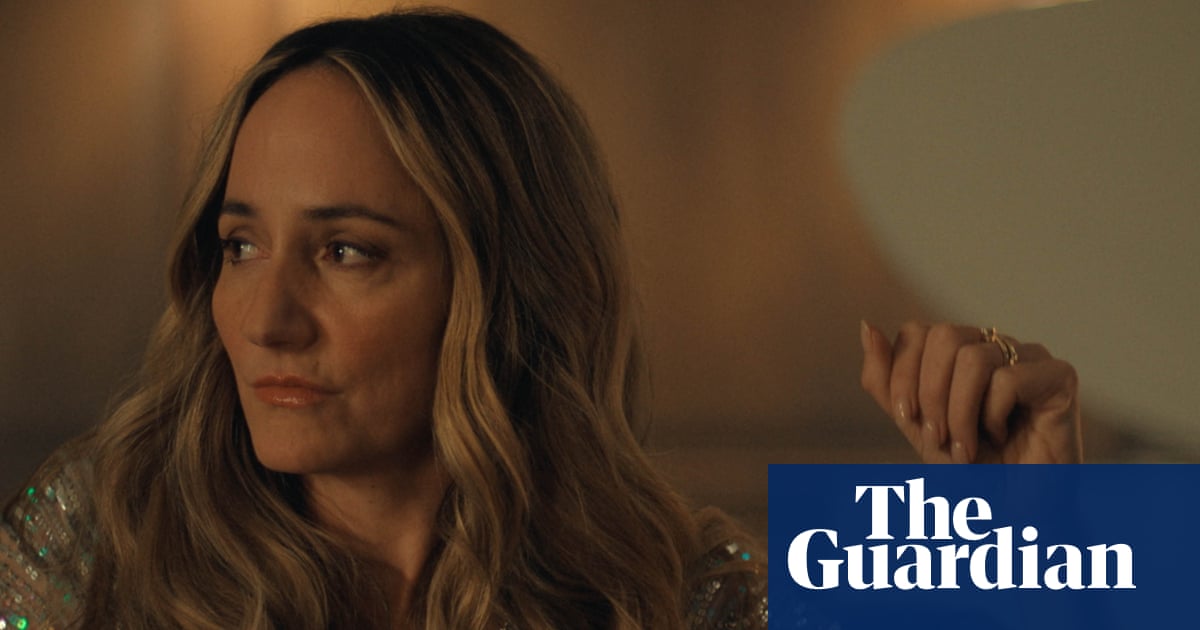
Indeed, it would be nearly impossible to erase all traces of sexuality from an intimate thriller centered on a young man from Tangiers torn between two starkly different romantic partners. While young contractor Mehdi (Driss Ramdi) is already half-engaged to Selma (Nadia Kounda), a socially reserved bakery worker, he soon finds himself drawn to the sexually liberated Marie (Sara Giraudeau) — an affluent Frenchwoman who begins as a client before becoming his lover and social benefactor, fueling his fantasies of upward mobility and a different life.
“I needed to maintain absolute creative freedom,” Benm’barek explains. “Marie gives access to her body — and it was important that this could be seen, since the story is experienced through Mehdi’s gaze. Selma, by contrast, is defined by modesty; she doesn’t reveal herself and denies access to her body. The intimate scenes therefore required a different visual language. These were deliberate choices, reflecting my artistic vision and the direction I wanted for the film, even if they may not resonate with everyone.”
Films like “Dirty Dancing” and “Titanic” resonated for Benm’barek as she wrote her latest feature.
“A lot of films follow a character moving from one social class to another, but I come from 90s thrillers and those slightly cheesy TV movies on Saturday nights,” she explains. “I make the kinds of films I would’ve loved as a spectator. I don’t think we should overthink everything. Pleasure has to stay at the center, because making films is hard — and it’s only getting harder.”
“Ours is a job full of doubt, where nothing is ever really easy,” she says. “So it’s important to hold on to that place of pleasure, to remember what made us want to create films in the first place. We were spectators before anything else, and we were moved by films. That sense of pleasure is essential — otherwise, it just becomes too hard to keep going.”