
Constantine Cavafy, Poetry’s Inadvertent Influencer
The apparition of my body in its youth,
since nine o’clock when I first turned up the lamp,
has come and found me and reminded me
of shuttered perfumed rooms
and of pleasure spent—what wanton pleasure!
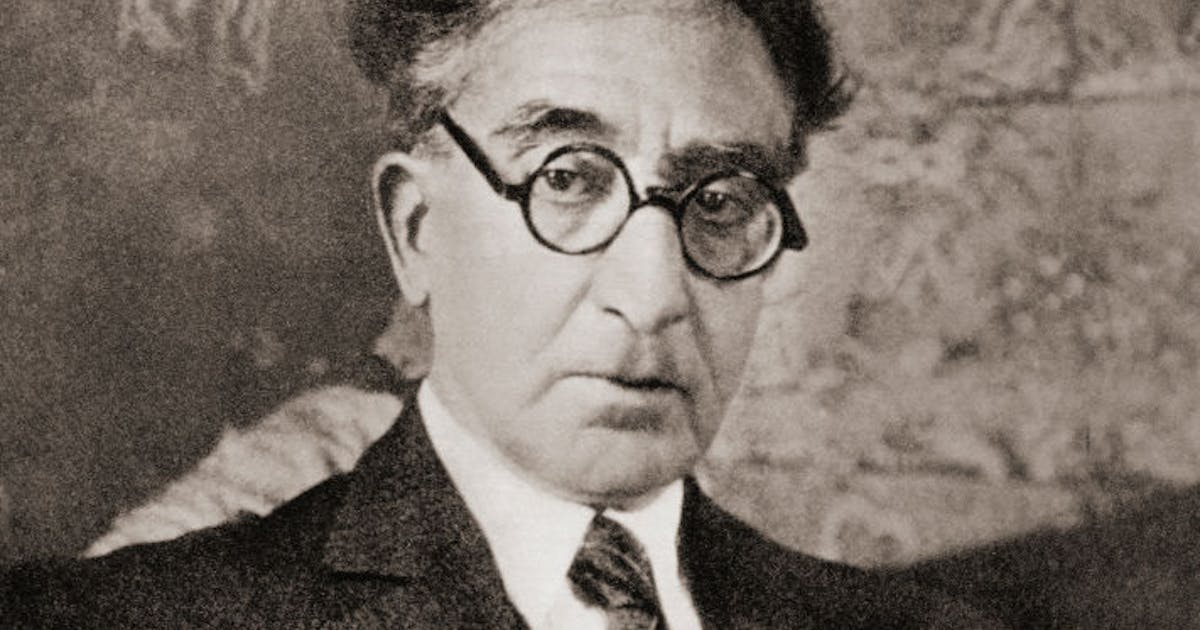
As the late Hellenistic scholar Peter Mackridge wrote, in his introduction to an Oxford collection of Cavafy’s poems, Cavafy was “often called a ‘poet of old age,’” but that statement might easily be rewritten to say he was a poet of “old age and old, half-remembered achievements.” Unlike his contemporary and admirer T.S. Eliot, he didn’t see history as ending “with a whimper” but rather with a long, subsiding, pleasurable sigh of recollection. For Cavafy, when life and history came close to their ending, poetry began.
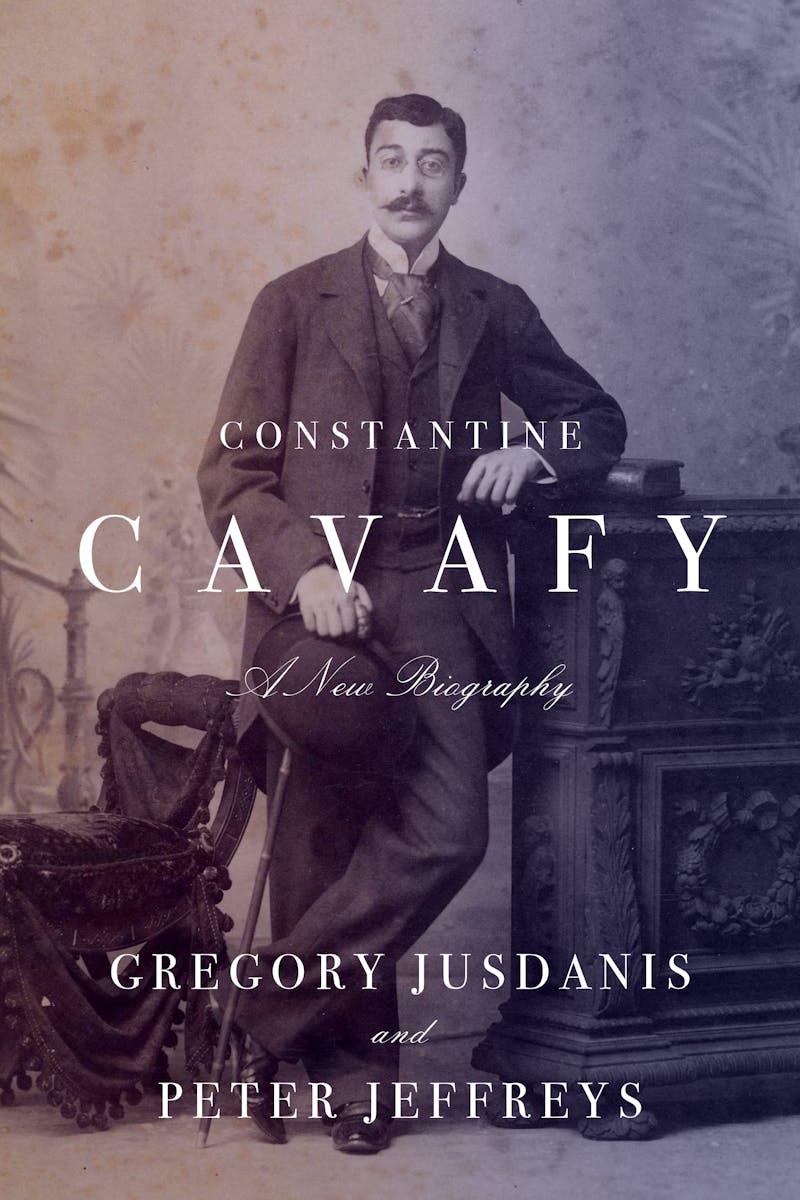
It’s probably a good time to read (or reread) Cavafy, a poet who lived in an era similarly turbulent to our own but who always found time to indulge himself with the less turbulent and (for him) more lasting pleasures of poetry. In Constantine Cavafy: A New Biography, Gregory Jusdanis and Peter Jeffreys have taken many liberties with the normal chronological structure of narrative storytelling, and mostly it pays off. Structured thematically—which sometimes means the reader gets a bit lost in the often sedate, expanding uneventfulness of Cavafy’s life—the book features long chapters focusing on distinct aspects of the poet’s life and work: His relationship with family members comprises one chapter, while social relationships with other hedonistic, spoiled young men like Cavafy himself comprise another. And there’s one long, fascinating section that simply details a normal day of Cavafy’s rambles through Alexandria. In many ways, the authors seem to have found the perfect “form” for presenting the complex figure of Cavafy—a relatively solitary and self-determined man who intersected with the events of his time and the people in his life, while still establishing his own sense of time and history in a series of unique poetic reflections. He never seemed to achieve great things or earn literary fame so much as steadily generate, and enjoy, books and streets and poetry and lovers and friends. He lived his life, just as he wrote his poems, like a series of sweet secrets.
Cavafy was born in Alexandria in 1863, the youngest of seven brothers; his family “was above all else defined by a Victorian mercantile ethos stemming largely from the network of the Anglo-Greek community that operated out of Manchester, Liverpool, and London,” according to Jusdanis and Jeffreys. And from a young age, Cavafy grew accustomed to having empires vanish under his feet. His father died when he was still a child; a subsequent worldwide depression (1873) dismantled the family business; and various political conflicts (such as the Anglo-Egyptian War of 1882), sent Cavafy and his family scurrying from Liverpool to Constantinople and back, until Cavafy, with his devoted mother, Heracleia, settled permanently in his hometown of Alexandria, where he spent the remainder of his life. Cavafy wasn’t the type of young man born to wrest his family from economic misfortune; spoiled and dandyish, he preferred hanging around cafés, bars, and brothels, and reading books. Both Constantine and his older brother, Peter, began dabbling with poetry from a young age; but only Constantine, after many years of dilettantism, as if lifting himself up by his own aesthetic bootstraps, began to shape himself as a world-class poet by the early 1900s—and one both influential and unclassifiable in equal measure. His work (also collected in a two-volume English translation by Daniel Mendelssohn in 2012) seems to have been deeply significant to the reading lives of his contemporaries—such as W.H. Auden, Eliot, and D.J. Enright—even while it is hard to find his influence in their works: Nobody ever quite wrote poems like Cavafy. Nor would they.