
Donald Trump Is Doing Socialism Now

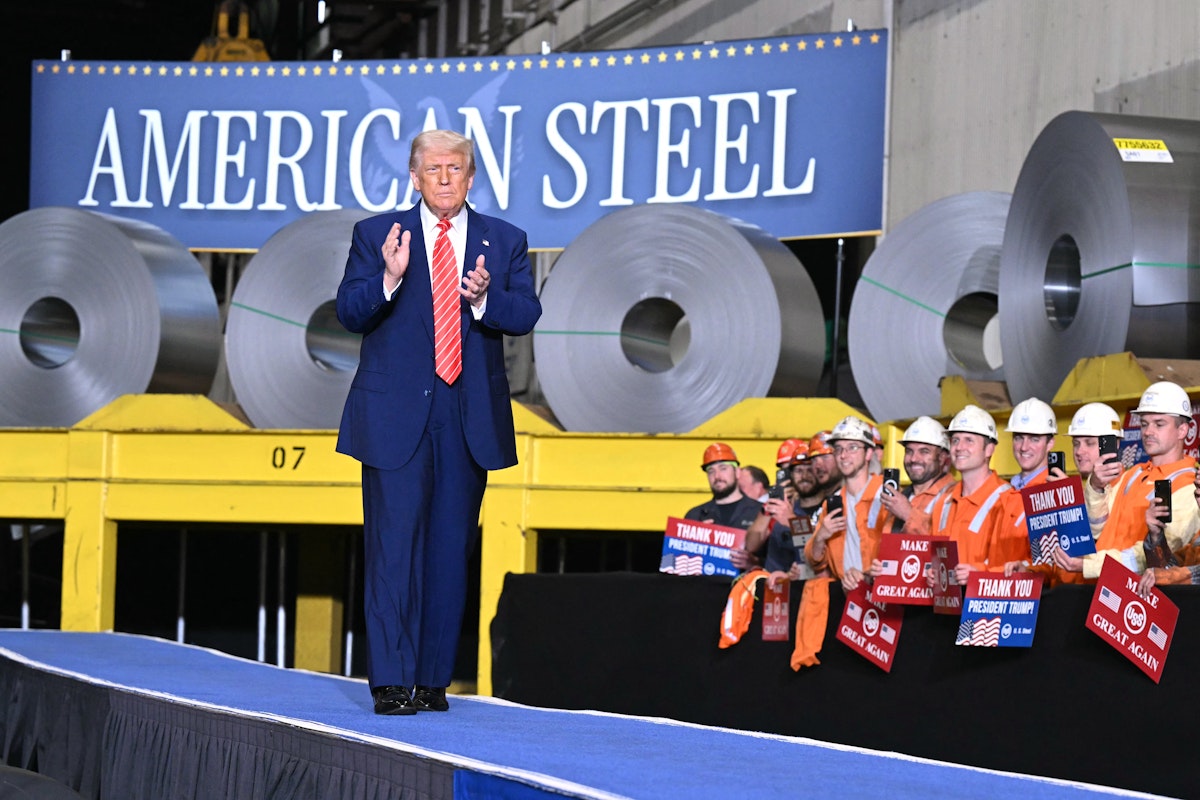
Here’s what Luttnick said the golden share prevents, in a June 14 tweet about the agreement:
• Relocate U.S. Steel’s headquarters from Pittsburgh, Pennsylvania.
• Redomicile outside the United States
• Change the name of the company from U.S. Steel
• Reduce, waive, or delay the $14 billion of Near-Term investments into U.S. Steel
• Transfer production or jobs outside the United States
• Close or idle plants before certain timeframes other than normal course temporary idling for safety, upgrades, etc.
• Other protections regarding employee salaries, anti-dumping pricing, raw materials and sourcing outside the U.S.
These are all very Trumpy, excepting the reference to salaries, something that never previously interested our commander in chief (and may not still). But they represent significant concessions by Nippon, especially when you remember that this agreement will remain in place long after Trump departs the White House.
The missing piece is a pledge to honor the United Steelworkers’ labor contract and to keep U.S. Steel a union shop. Understandably, this omission did not please the United Steelworkers union, which continues to oppose the merger. The union is also skeptical that Trump will act to prevent plant closures. He may not; but future presidents may. Given Trump’s terrible track record on labor rights, this is about as good a deal as the Steelworkers were ever going to get. But yes, President Joe Biden would have cut a much better deal for the union.
It was Biden, of course, who first blocked the Nippon–U.S. Steel merger. That was a political maneuver made during election season in spite of a reportedly divided assessment by the Treasury’s Committee on Foreign Investment in the United States, which was tasked with assessing the national security implications. The truth is there aren’t any.
We still think of U.S. Steel as the colossus it was in the 1950s, but it’s no longer even the biggest steelmaker inside the United States; at least three American competitors (Nucor, Steel Dynamics, Cleveland-Cliffs) bring in more revenue, and two (Nucor and Cleveland-Cliffs) employ significantly more workers. Granted, Nucor and Steel Dynamics are non-union shops, but Cleveland-Cliffs, like U.S. Steel, operates under a United Steelworkers contract. My main feeling about Nippon wanting to own U.S. Steel is: Thank goodness someone wants it—and thank goodness the foreign nation in question is one of America’s most reliable allies.