Putin's ally in NATO backs down in Russia sanctions standoff
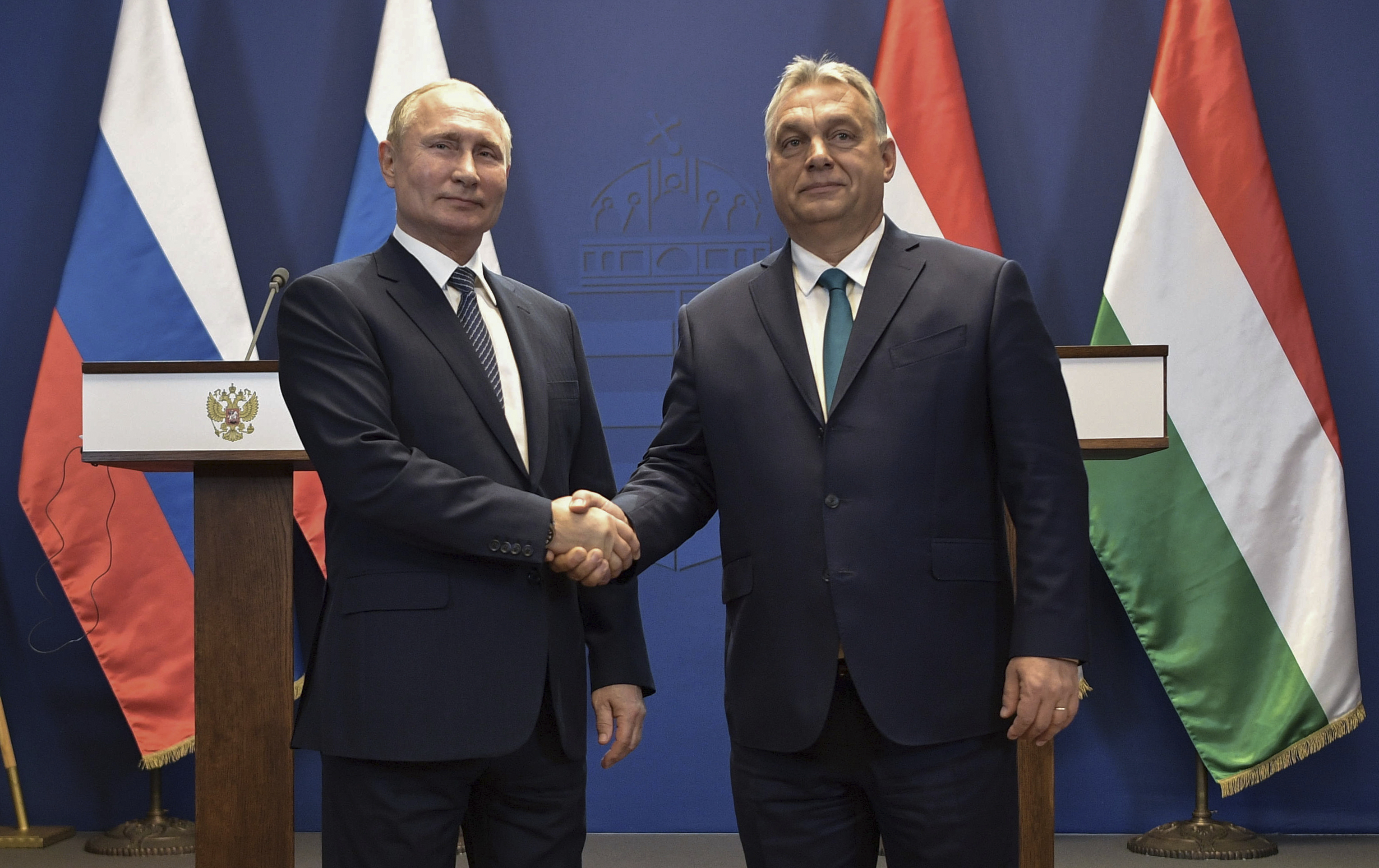
Russian President Vladimir Putin's ally in NATO has dropped its objections to the renewal of EU sanctions against Moscow. The EU has now reached a last-minute deal with Hungary to renew the sanctions for six months after Budapest had previously delayed the move over concerns regarding energy security, according to Reuters.
In a statement the EU said it would "continue discussions with Ukraine on the supply to Europe through the gas pipeline system in Ukraine," including Hungary and Slovakia in the discussions. This refers to an expired Ukraine-Russia gas transit deal.
Newsweek reached out to the Ministry of Foreign Affairs of the Russian Federation and Hungary's Ministry of Foreign Affairs and Trade for comment via email.

Why It Matters
Europe's renewal of sanctions against Russia will have significant ramifications on Moscow's economy, putting strain on its ability to fund the war in Ukraine. The renewal of sanctions has also prevented Russia from regaining billions in frozen funds, as members of the G7 froze approximately $300 billion worth of Russian Central Bank assets held in financial institutions abroad soon after the war began in 2022.
Budapest's decision to back down on the sanctions may damage Hungarian Prime Minister Viktor Orbán's relationship with Putin.
What To Know
Diplomats told Politico that an agreement was reached on Monday morning, which allows the EU's sanctions to be renewed before the deadline on February 1. The sanctions to be renewed include sector-based bans on trade and the measures that froze Russia's central bank assets.
All 27 EU countries must vote to reauthorize sanctions every six months, and renewal requires unanimity. Orbán previously called for consultations with President Donald Trump's administration before agreeing to renew the sanctions. However, Trump's recent post on Truth Social threatening to impose sanctions and tariffs on Russia unless Putin ends the war with Ukraine indicates that he is focussed on exerting pressure on Moscow.
In delaying the renewal of sanctions, Budapest cited its previous statement that it wants to persuade Ukraine to resume gas transit from Russia to Europe. Orbán previously said that the sanctions on Russia had cost Budapest €19 billion ($19.9 billion) and that it was "not good that we pay the price of helping Ukraine…and they cause us problems," referring to the previous gas transit deal.
The Ukraine-Russia gas transit agreement, which expired on January 1, allowed Moscow's energy firm Gazprom to provide fuel to European customers through Ukraine.
Hungarian Foreign Minister Peter Szijjarto had previously stated that Budapest's decision on renewing sanctions would depend on "whether the European Commission will give guarantees that it will take steps every time the energy security of EU member states is threatened from outside the European Union."
Russia and Hungary have close economic and political ties, and Putin and Orbán are long-time allies. Budapest has faced backlash over its support of Moscow, having previously refused to supply Kyiv with weapons.
What People Are Saying
Upon reaching the agreement with the EU, Szijjarto wrote on Facebook: "Hungary has received the requested guarantees regarding the energy security of our country. The European Commission has committed itself to the protection of natural gas and petroleum pipelines leading to the European Union member states. It has been made clear: the acuity of the energy infrastructure providing for the EU member states is a question of the security of the whole EU. The European Commission is also asking for insurance from Ukraine in order to maintain the petroleum shipments to the EU. Details will be announced soon!"
In a post on X, formerly known as Twitter, EU High Representative for Foreign Affairs and Security Policy Kaja Kallas wrote: "Europe delivers: EU Foreign Ministers just agreed to extend again the sanctions on Russia. This will continue to deprive Moscow of revenues to finance its war. Russia needs to pay for the damage they are causing."
Kenneth Roth, former executive director of Human Rights Watch, wrote: "Hungary's Orban turns out to be all bluster. He had threatened to block further sanctions against Russia unless he was allowed to continue to profit from cheap Russian gas (funding the invasion of Ukraine). The European Union stood up to his empty threat."
What Happens Next
It is uncertain how long Russia will be able to sustain funding the war after the renewal of EU sanctions and what consequences Budapest's decision will have on its relationship with Moscow.