
The Late-Capitalist Menace at the Heart of “Cloud”
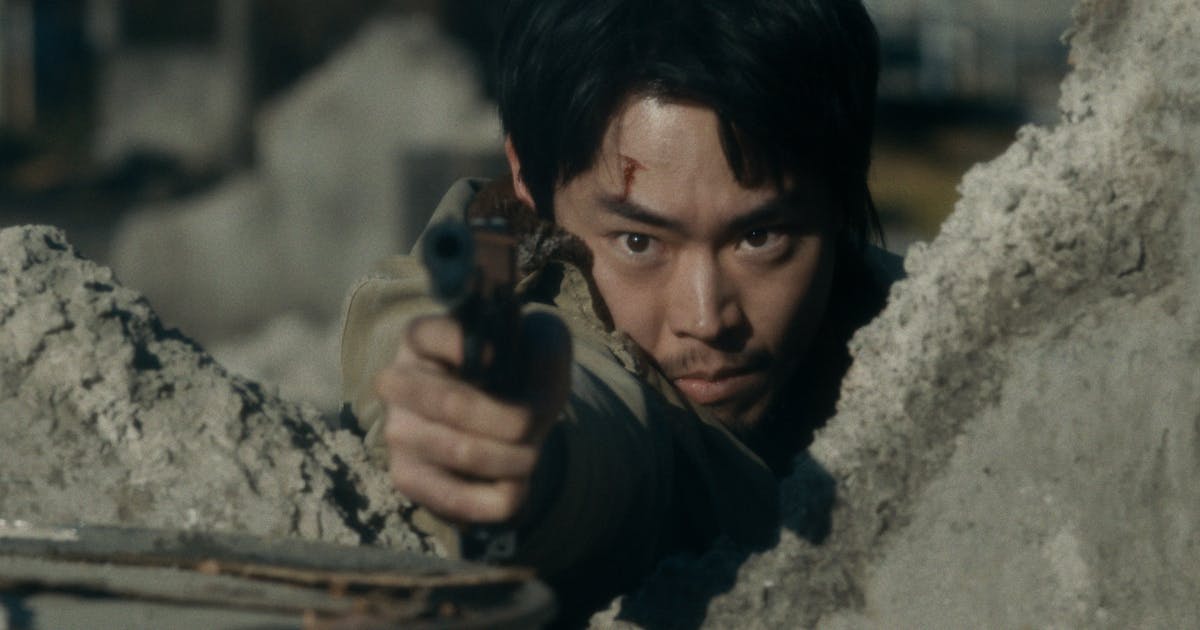
“You operate on impulse and instinct,” says one woman as Yoshii cruises coolly through her Tokyo warehouse, inspecting her inventory with calculating disdain. She doesn’t mean it as a compliment.
For his part, Yoshii isn’t offended. In fact, he’s already internalized the sentiment. His chosen online handle, “Ratel,” is another name for the honey badger, an animal that went viral in 2011 for not giving a fuck; whether the reference is intentional or just another way of saying “rat,” it distills a furtive, distinctly millennial grindset. The name also embodies the same tenacious, neo-Darwinian instincts glimpsed in Bong Joon Ho’s Oscar-winner Parasite, which Kurosawa’s film slots alongside nicely as a companion piece, or maybe a riffier, more dissonant B-side. Where Bong excels in a brawny, bravura form of crowd-pleasing—an approach that unfortunately failed him earlier this year in Mickey 17—Kurosawa isn’t afraid to be misunderstood. Unlike Parasite’s merry band of home invaders, Yoshii doesn’t see himself as a class warrior, nor is he bound by family ties. Rather, he’s very much his own crazy, nasty-ass animal, and perfectly happy to be perceived as vermin, provided he moves enough units. The key to Ratel’s scavenger persona lies in a combination of agility, anonymity, and furiously suppressed appetites, which sometimes get the better of him. He doesn’t want to let his eyes get bigger than his stomach; he knows that the worst thing he could do is to gnaw the invisible hand that feeds him.
The intricate interplay between impulse and instinct—and the carnage that ensues when those mechanisms go haywire, whether under external pressure or from the inside out—is an essential component of Kurosawa’s cinema. This was especially true of his 1997 breakthrough, Cure, a genuinely frightening study of free will whose psych-major villain weaponized his victims’ submerged grudges and secret desires. (The bad guy is a cheesy archetype—a sinister hypnotist—but the movie elides clichés; in a wicked twist, his subjects greet him almost gratefully, as a subconscious liberator.) Cure’s grim tone and savvy evocation of ’90s serial-killer signifiers—i.e., the gory x-marks-the-spot motif recasting crime scenes as expressionist canvases à la Se7en—made it an international hit; in retrospect, it serves as the dividing line in Kurosawa’s career between his extended apprenticeship as a willing and adaptable director for hire in the Japanese studio system in the 1980s and ’90s and a capital-A auteur traversing the festival circuit. His subsequent reputation as a genre specialist, buttressed by movies like Pulse, Retribution, and the aptly titled Creepy, belies the actual diversity of his twenty-first-century output, but it’s well earned: He’s peerless when it comes to manifesting menace.