
'The Wire's 10 Least Enjoyable Episodes, Ranked
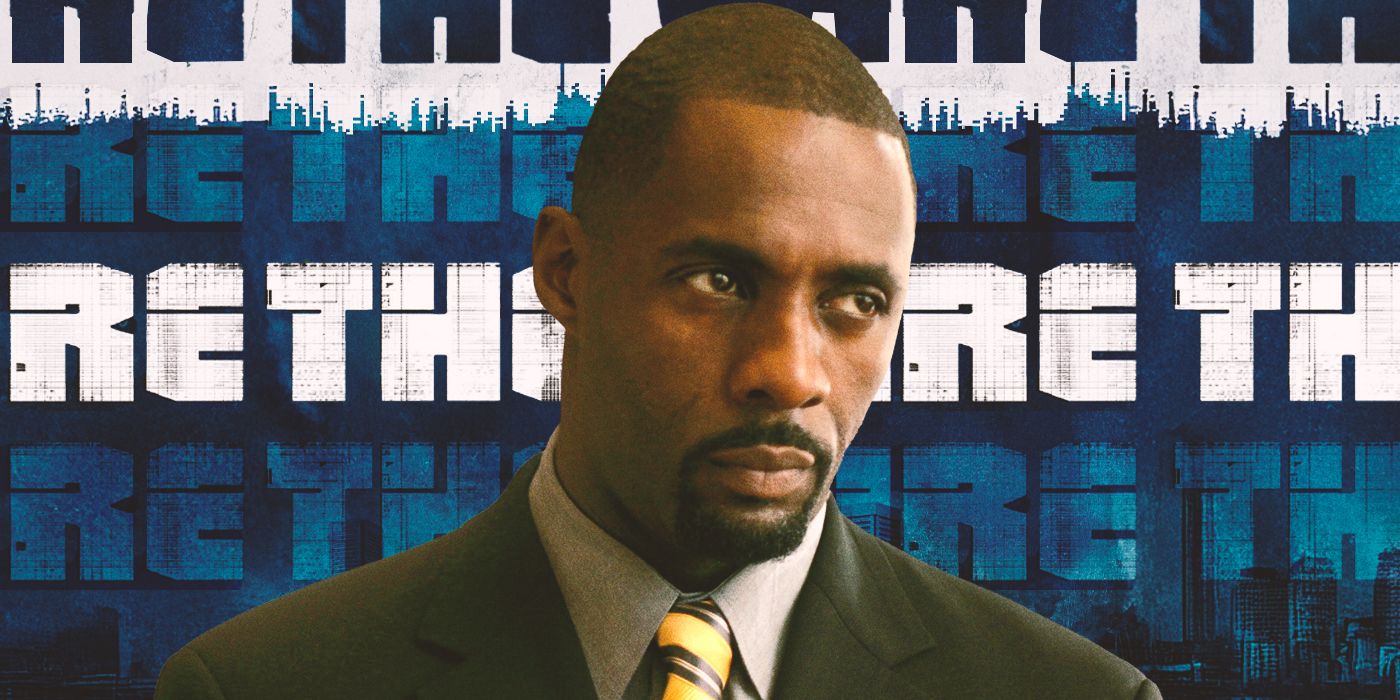
Created by former police reporter David Simon, The Wireis a scathing and holistic analysis of a city’s drug trade and the police operations that, while marred by bureaucratic hold-ups and political slants, try to bring them down. The series transpires in Baltimore, with each of its five seasons exploring a different aspect of the city’s crime infrastructure, be it the street dealers slinging drugs in the projects, or the impoverished youth trapped in ill-equipped public schools where they are exploited by the allure of the drug trade.
To make one thing absolutely clear, a series like The Wire doesn’t have truly bad episodes so much as it has certain episodes that aren’t as astoundingly magnificent as others. That being said, those who are die-hard fans of Season 2 and Season 5 may want to avert their eyes now. Ranging from occasional misfires to episodes that simply weren’t as lively as some of the series’ better installments, these are the 10 weakest episodes of The Wire.
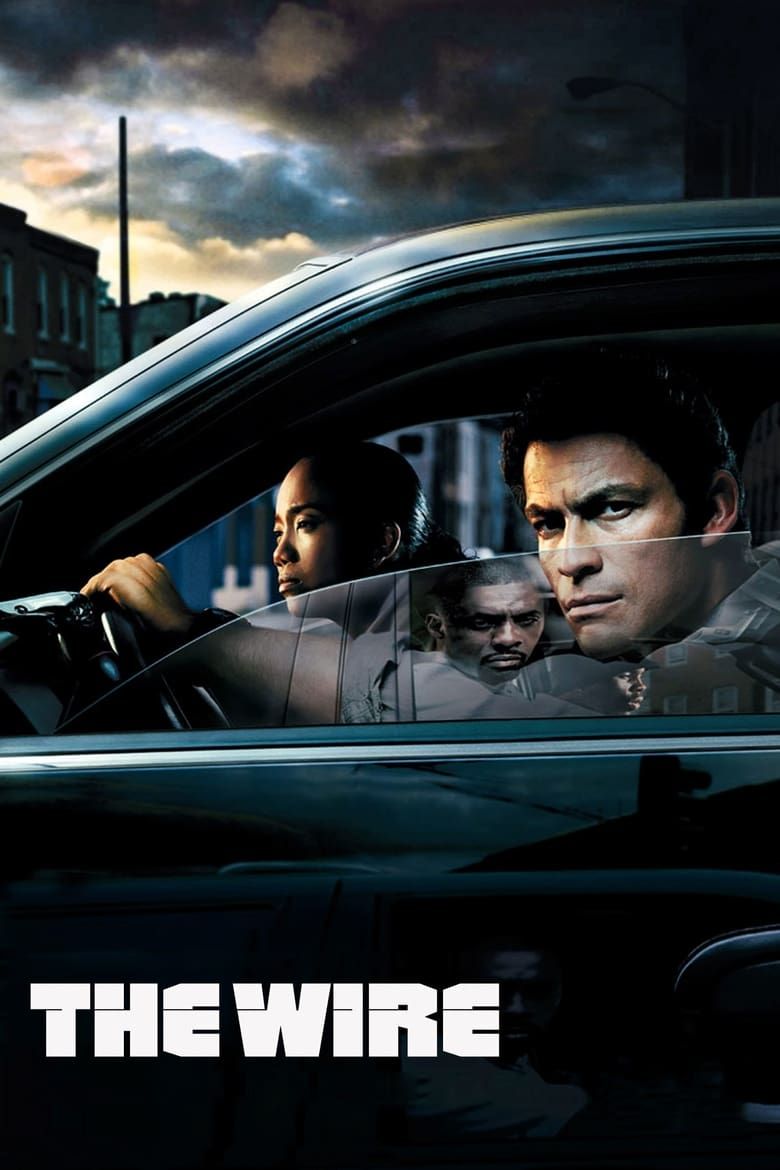
Release Date
2002 - 2008-00-00
Network
HBO
10
"Backwash" (2003)
Season 2, Episode 7
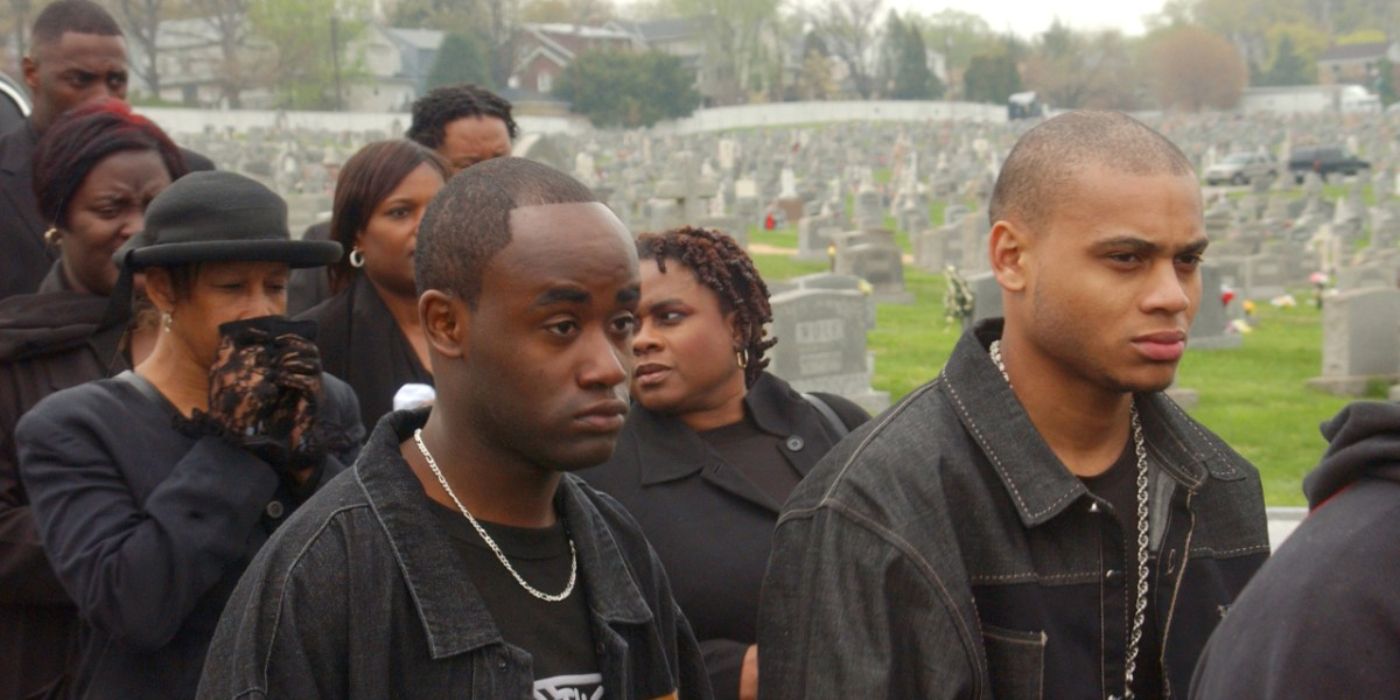
Daniels (Lance Reddick) struggles to get what he wants from the force and reluctantly agrees to take the case of the multiple Jane Does off homicide’s hands in exchange for more resources, while Greggs (Sonja Sohn) and Pryzbylewski (Jim True-Frost) find a new lead for a wiretap. Meanwhile, Frank Sobotka (Chris Bauer) pressures a lobbyist as new changes threaten to make stevedores redundant, and the Barksdale crew reel in the aftermath of D’Angelo’s (Lawrence Gilliard Jr.) apparent suicide.
While Season 2 of The Wire is significantly better than its most vocal critics give it credit for, the pivot to focus on the docks still marks an understandably polarizing chapter of the series and one that contains several of the show’s weakest episodes. “Backwash” is a prime example of this. While it isn’t bad by any stretch of the imagination, it does serve as something of an intermediary episode between the season’s building story through the middle episodes and its chaotic conclusion.
9
"Time After Time" (2004)
Season 3, Episode 1
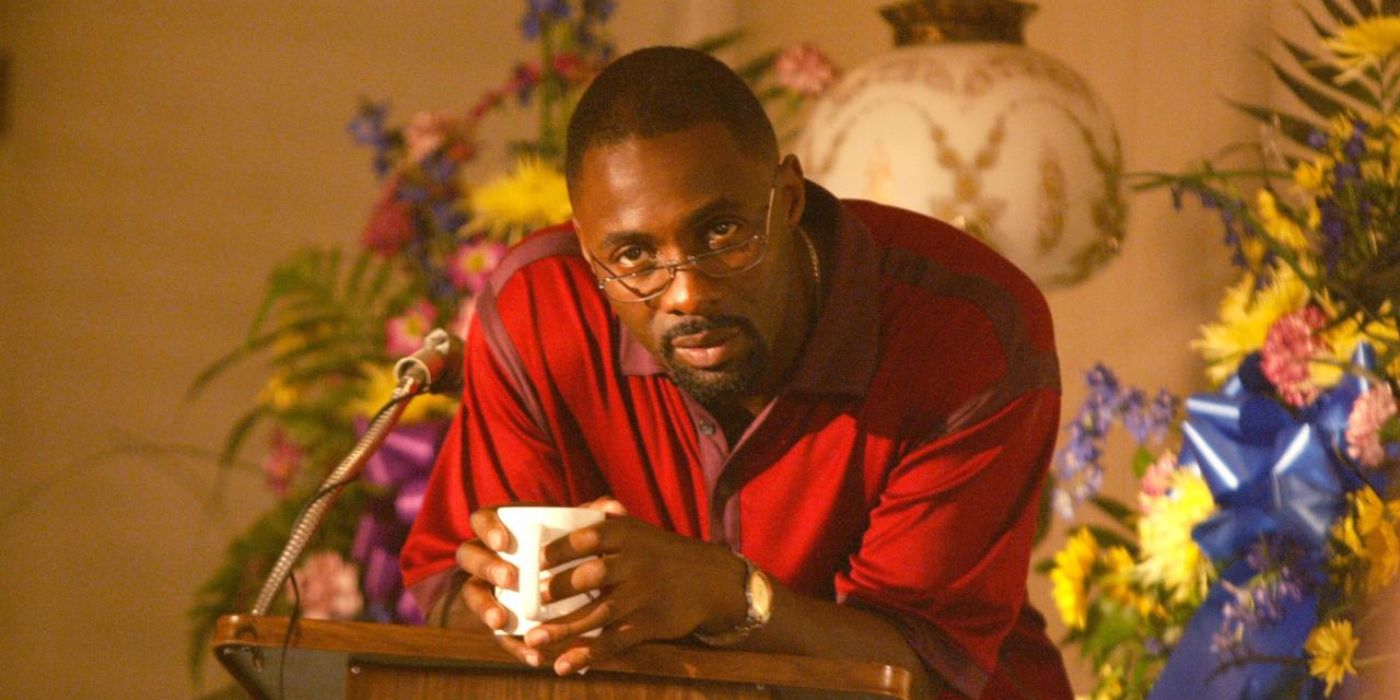
Following the major narrative pivot to the docks in Season 2, the Season 3 premiere had to guide audiences back to the Barksdale operation. It does so by opening the demolition of the Towers, the housing complex where Avon Barksdale (Wood Harris) kick-started his city-spanning drug empire. As such, Avon and Stringer Bell (Idris Elba) must find a new base of operations, bringing about a change in their business climate that soon leads to issues. Elsewhere, Councilman Tommy Carcetti (Aidan Gillen) hopes to reshape Baltimore’s political landscape, and Marlo Stanfield announces himself as an up-and-coming drug kingpin through his reckless brutality.
The strenuous effort the episode needs to go through to submerge viewers in the new setting sees Season 3 get off to a slow start, and not an entirely accessible one. That being said, there is still intrigue everywhere. The tighter look at how the higher-ups of the Barksdale crew function is engrossing, while the inclusion of a rival drug dealer and an ambitious politician imbues the season with a renewed interest.
8
"Refugees" (2006)
Season 4, Episode 4
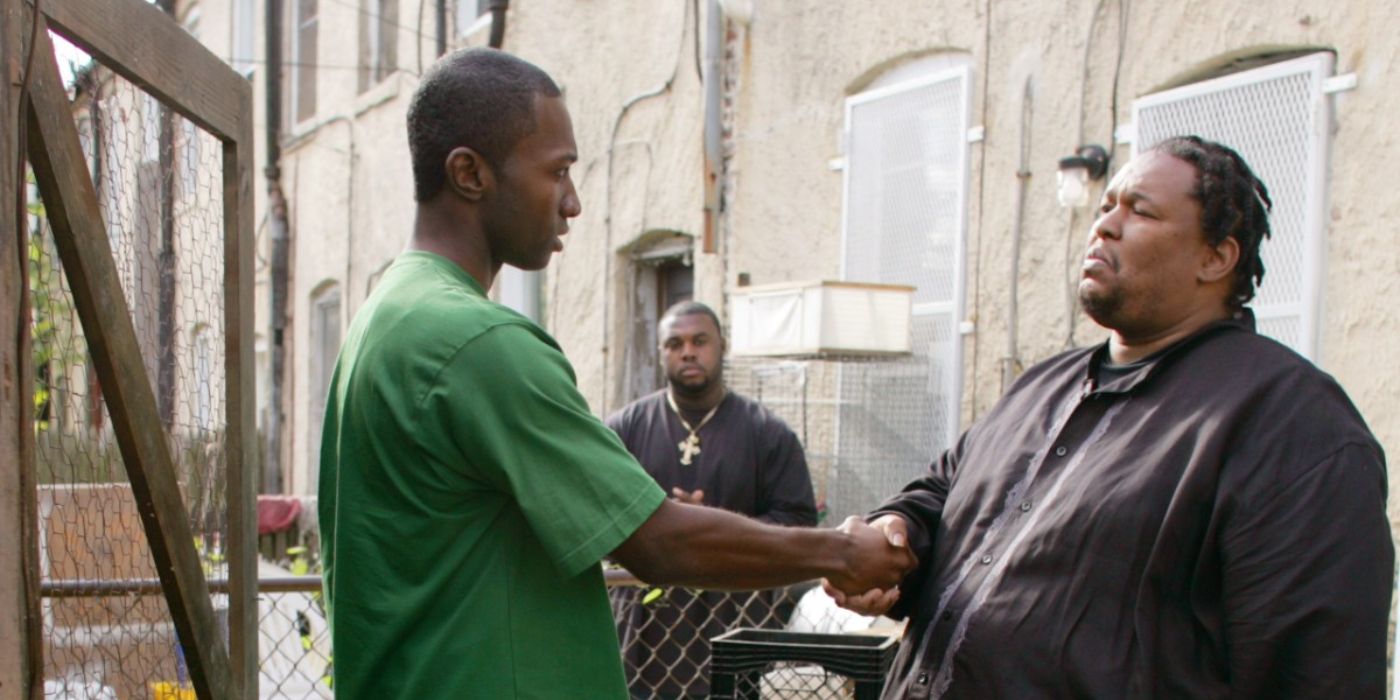
Much of Season 4 focuses on the education system in America and how it is failing many of the disadvantaged youths trapped in schools that don’t prioritize the teaching of their students. To give “Refugees” its due, it is actually an episode that is quite emphatic in this regard. Bubbles (Andre Royo) tries to ensure Sherrod (Rashad Orange) still attends school while Cutty (Chad Coleman) accepts a position as the school’s truancy officer and learns the school only rounds up truants in order to secure government funding by meeting a minimum attendance figure. Elsewhere, Omar (Michael K. Williams) holds up a poker game and steals from Marlo (Jamie Hector) in the process, and the Major Crimes Unit is decimated under the command of a new head.
While it is enlightening in a shocking and dejecting way, “Refugees” runs more as an exposé of the failures of American institutions that are meant to nurture and protect the young, more so than a meticulously plotted episode. This ensures it is still profoundly powerful and even devastating with the hopeless lens it casts on the school, but it doesn’t make it thrive in a storytelling sense. Despite the fact it homes in on the core of Season 4, the thematic focus that made it such a masterpiece of television, “Refugees” is the weakest episode of the season.
7
"The Detail" (2002)
Season 1, Episode 2
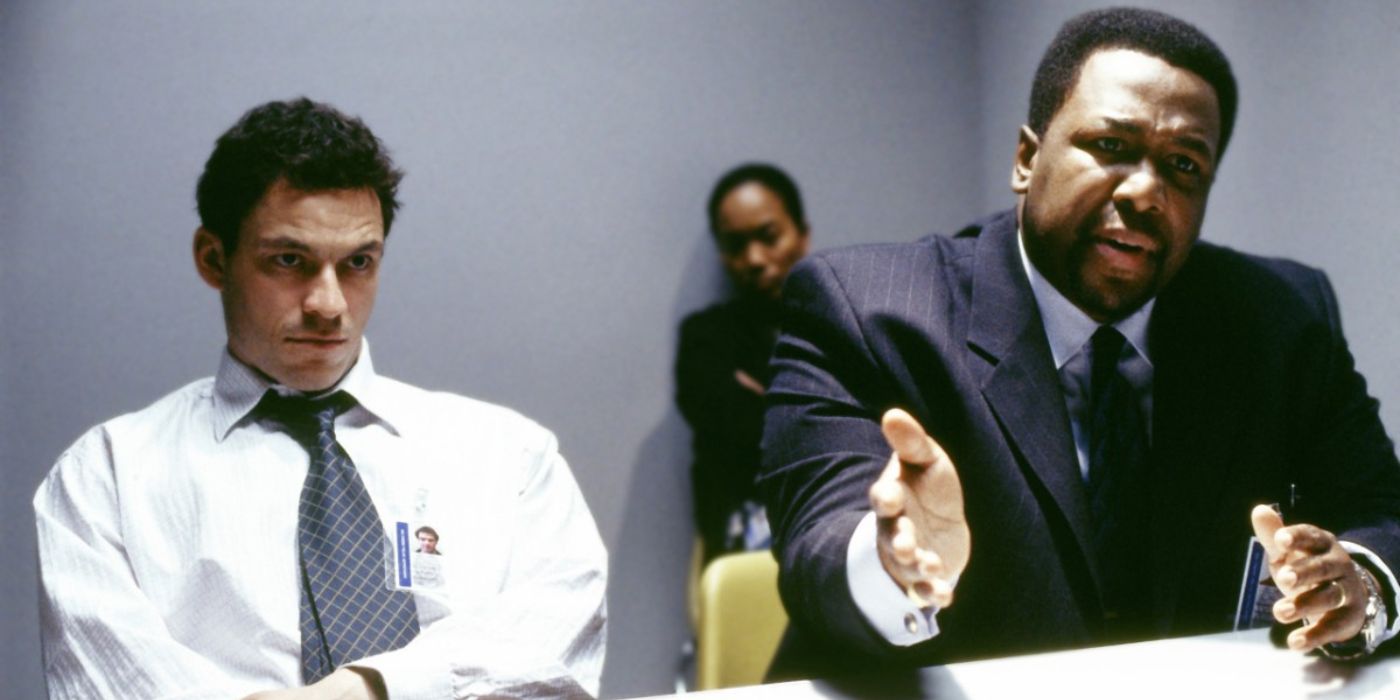
The second ever episode of The Wire, “The Detail”, actually has some brilliant elements. The introduction to the detail working the Barksdale case reveals the true level of complacency and indifference that defines the BPD’s efforts to thwart the drug lord’s operation. In stark juxtaposition to that, the more that is unveiled about how Barksdale arranges his crew, the more it becomes apparent that he has orchestrated a precise and efficient structure to his criminal empire. The episode even has D’Angelo’s hilarious rant that ties all the corruption and greed of American capitalism to the invention of the chicken McNugget.
However, while “The Detail” has some fantastic moments, it also has some absurd and unbecoming ones as well. D’Angelo being forced by McNulty (Dominic West) and Bunk (Wendell Pierce) to write an apology letter to the children of a dead victim feels inorganic and corny, while the sequence in which three reckless young cops instigate a confrontation with some inhabitants of the high rises stands out for its careless execution. It isn’t enough to make “The Detail” a bad episode of television, but, such is the excellence of The Wire, it is enough to make it one of the more grating entries in the series.
6
"React Quotes" (2008)
Season 5, Episode 5
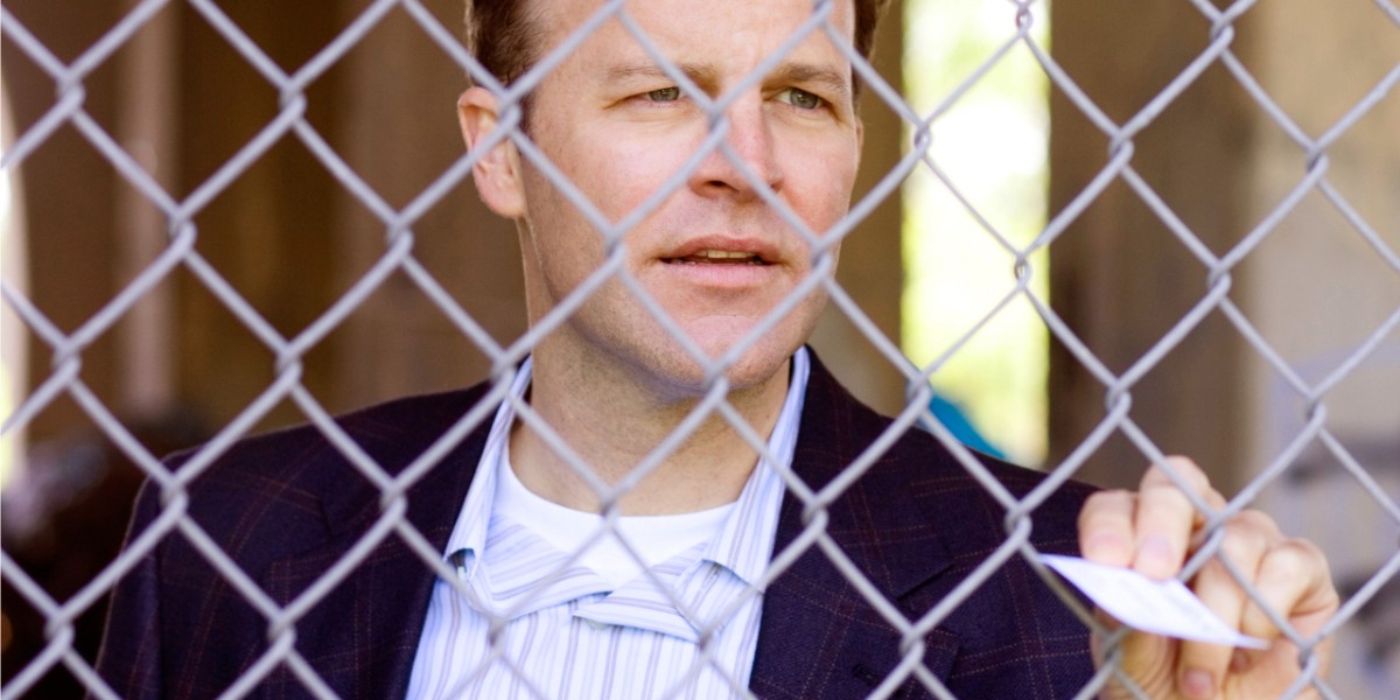
The much-maligned fifth season of The Wire, unsurprisingly, contributed to several of the series’ more aimless and unfocused episodes as it jumps the shark with McNulty’s efforts to stage the reign of an active serial killer in order to force the BDP to put money back into the depleted homicide unit. “React Quotes” sees his cunning ploy grow to be rather volatile through the media’s coverage of the story. Meanwhile, Marlo makes a move to expand his grasp of the city’s drug trade while being pursued by Omar.
While it maintains a serious tone, “React Quotes” has the occasional feeling that it is erring towards satire. McNulty’s predicament intensifies as the fabricating and immoral journalist Scott Templeton (Tom McCarthy) fakes a call with the non-existent serial killer to boost his own career begins a plot thread that is a distraction from the series’ consistent feeling of authenticity. Omar jumping from the fourth story of an apartment building to escape a shootout only to suffer an injured leg is another departure from The Wire’s realism that makes “React Quotes” one of the series’ most absurd and unflattering episodes.
5
"Ebb Tide" (2003)
Season 2, Episode 1
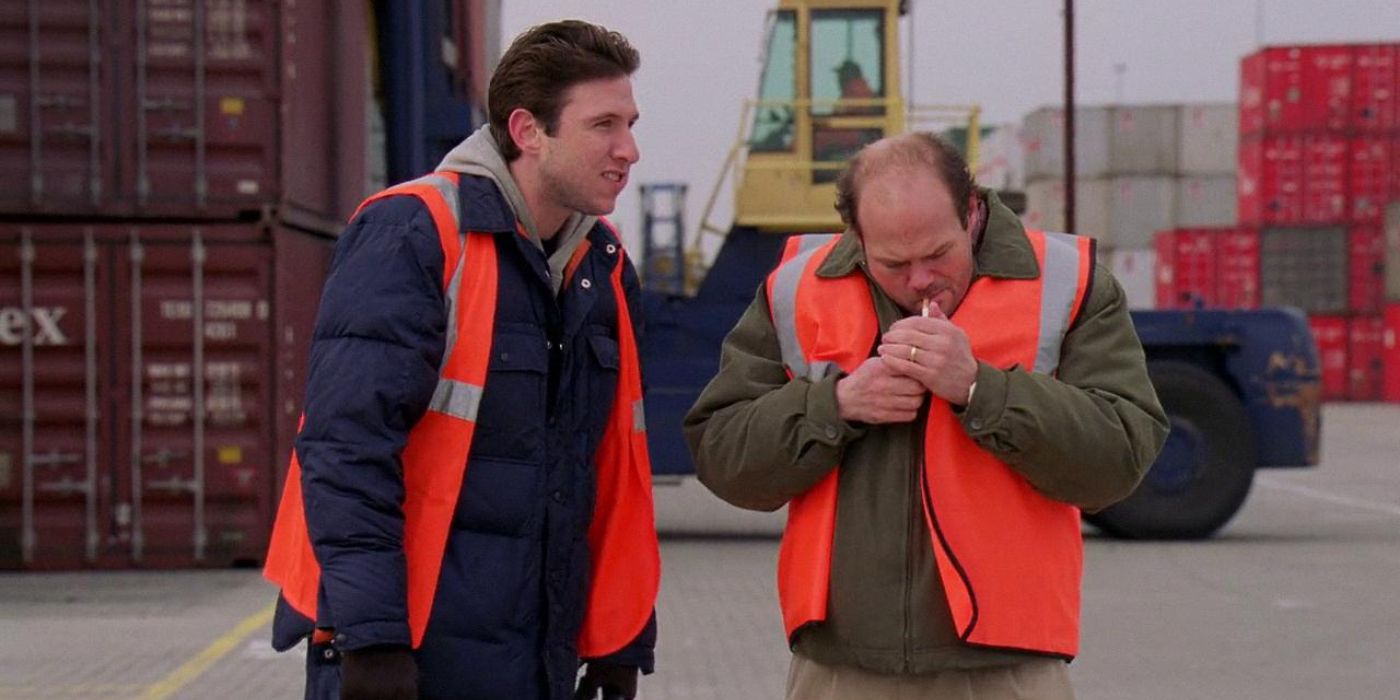
As previously stated, Season 2 of The Wire was received as an unwelcomed departure from the story of the projects and the intense focus on the Barksdale organization. Such a drastic pivot from what audiences had grown familiar with wasn’t at all helped by the fact that the Season 2 premiere, “Ebb Tide,” marks one of the more listless and monotonous entries in the whole series. McNulty—now assigned to the BPD’s marine unit—discovers a woman’s body floating in the harbor and makes it homicide’s case. Meanwhile, the Barksdale’s new relationship with New York falls through as Stringer Bell takes over the operation while Avon serves his sentence.
“Ebb Tide” drastically expands the world of The Wire, perhaps in a way that is underappreciated. The influx of new characters are all introduced with depth and dramatic intrigue, while there remains a background focus on Barksdale’s empire. However, the new case is presented with a meek dawdle rather than a captivating ferocity, making for an uneventful premiere that alienates viewers without giving them much to cling on to initially as the story is uprooted completely.
4
"Collateral Damage" (2003)
Season 2, Episode 2
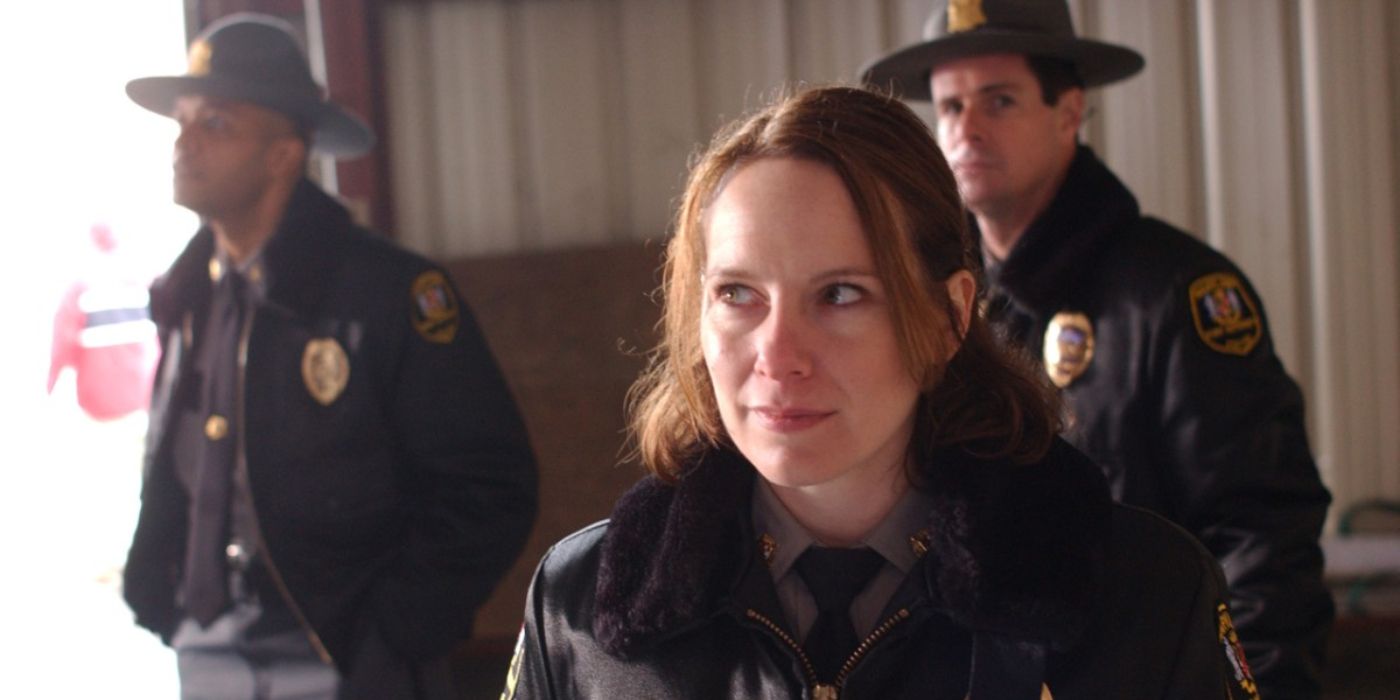
Unfortunately, Season 2’s limp premiere only continued in the following outing, “Collateral Damage.” In the Baltimore Police Department, McNulty persists with his efforts to ensure the case of the Jane Does is allocated to homicide, much to the chagrin of the division’s careerist and disinterested head, William Rawls (John Doman), who doesn’t want to be inundated with hopeless cases that will impede homicide’s closed case record. Elsewhere, members of the Sobotka family experience their own issues with the law, while the Greek (Bill Raymond) begins to make his presence felt in the context of the Jane Doe debacle.
The episode begins to get the cogs of Season 2 moving, but the story’s pacing remains arduous and tempered, especially as the many new faces in the series are still being established. While the Greek’s gruesome execution of a worker complicit in the deaths of the girls in the episode’s conclusion does generate some momentum for the series, the bulk of the episode’s run beforehand is largely unmemorable, even if it does delve deeper into how Barksdale’s crime operation is changing under Stringer Bell’s management.
3
"The Dickensian Aspect" (2008)
Season 5, Episode 6
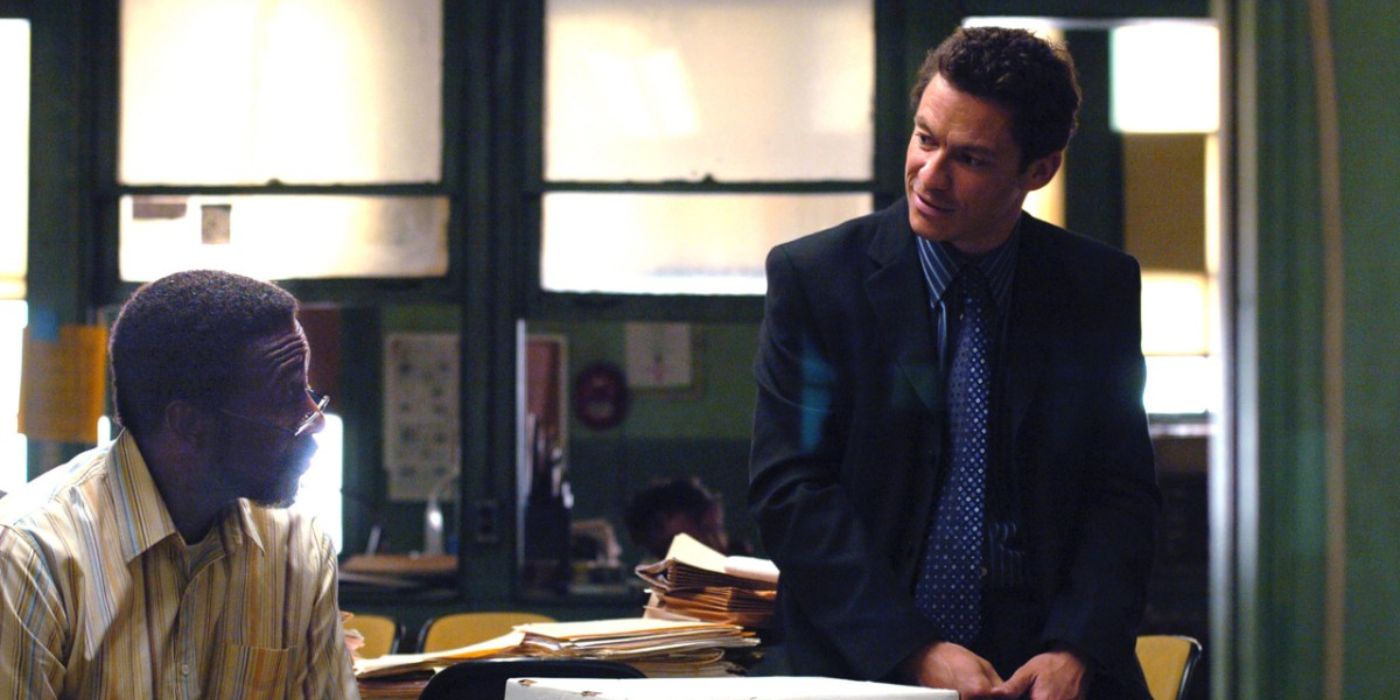
Season 5’s strenuous and challenging middle episodes didn’t get any better with “The Dickensian Aspect.” Committing further to McNulty’s spiraling scheme, and losing face because of it, the episode sees him and Lester Freamon (Clarke Peters) having to evolve their duplicity when every report of a dead homeless person is responded by police immediately. Spurned by necessity, the duo kidnap a mentally unstable homeless man to propel their lie. Meanwhile, Marlo’s crew ramp up their search for Omar, Pearlman (Deirdre Lovejoy) uncovers evidence of corruption at City Hall, and Mayor Carcetti makes a point of wanting to protect the city’s homeless from the active serial killer.
The Wire often excels at depicting how actions by one seemingly isolated faction can ripple across an entire city with unintended and devastating consequences, but seeing McNulty’s serial killer scheme evolve in such a way is far from rewarding. The depths of Templeton’s depravity and moral bankruptcy begin to reveal themselves as well, and while it is interesting to see such a shade of corruption cast upon the press, it does little to override the episode’s biggest flaws.
2
"Transitions" (2008)
Season 5, Episode 4
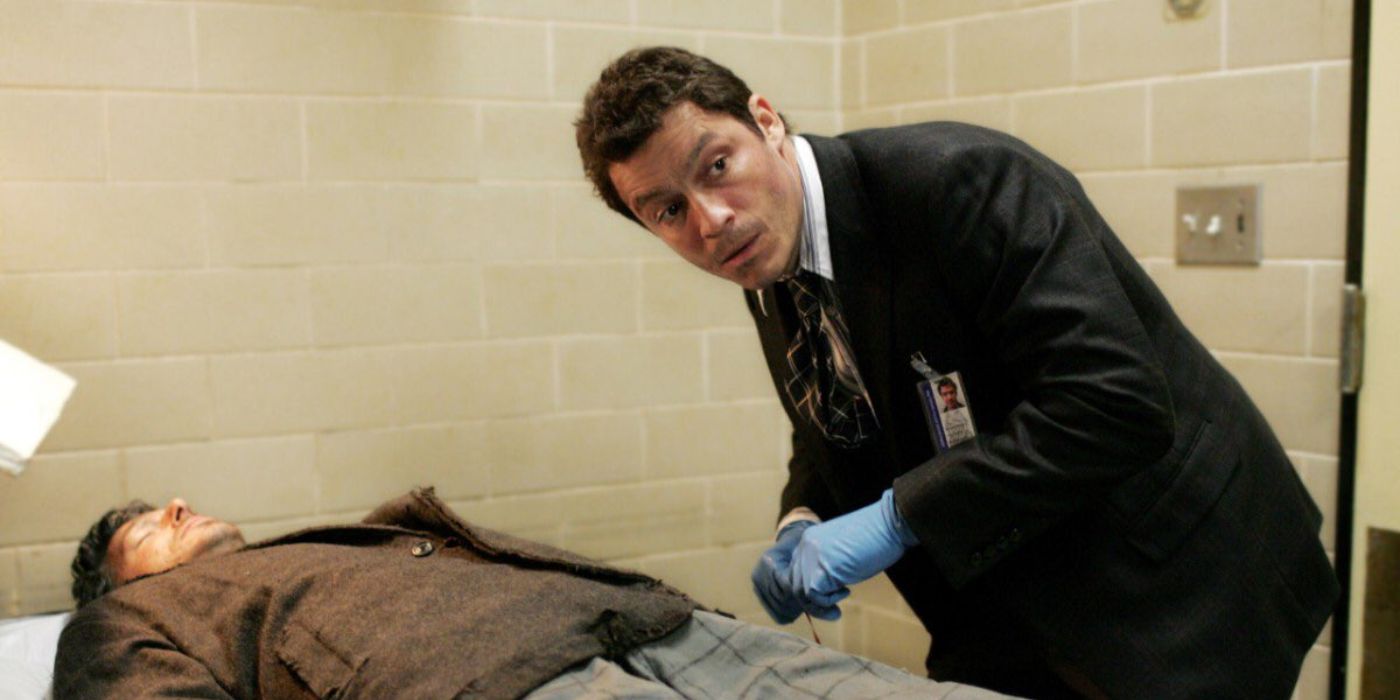
While it doesn’t necessarily offer any moments of huge significance, “Transitions” is largely another great example of The Wire’s storytelling fluidity and its thematic depth. In the journalism world, Templeton misses out on a great scoop for The Baltimore Sun concerning surprising news from City Hall. Meanwhile, Marlo tries to build a relationship with the Greeks, and Proposition Joe (Robert F. Chew) decides to make himself scarce. What the episode is ultimately remembered for, however, is the absurdity of its final moments.
McNulty’s audacious ploy to stage the emergence of a serial killer slumps to unedifying new lows, with he and Freamon using a homeless person’s death to orchestrate another supposed attack. The deceit of the duo imparting fake defensive wounds on the deceased is one thing, but the moment they decide to leave bite marks on the “victim” with fake dentures marks a point at which the scheme goes from being bizarre to outright goofy. It is perhaps the silliest and most unbecoming scene in the entire series.
1
"Unconfirmed Reports" (2008)
Season 5, Episode 2
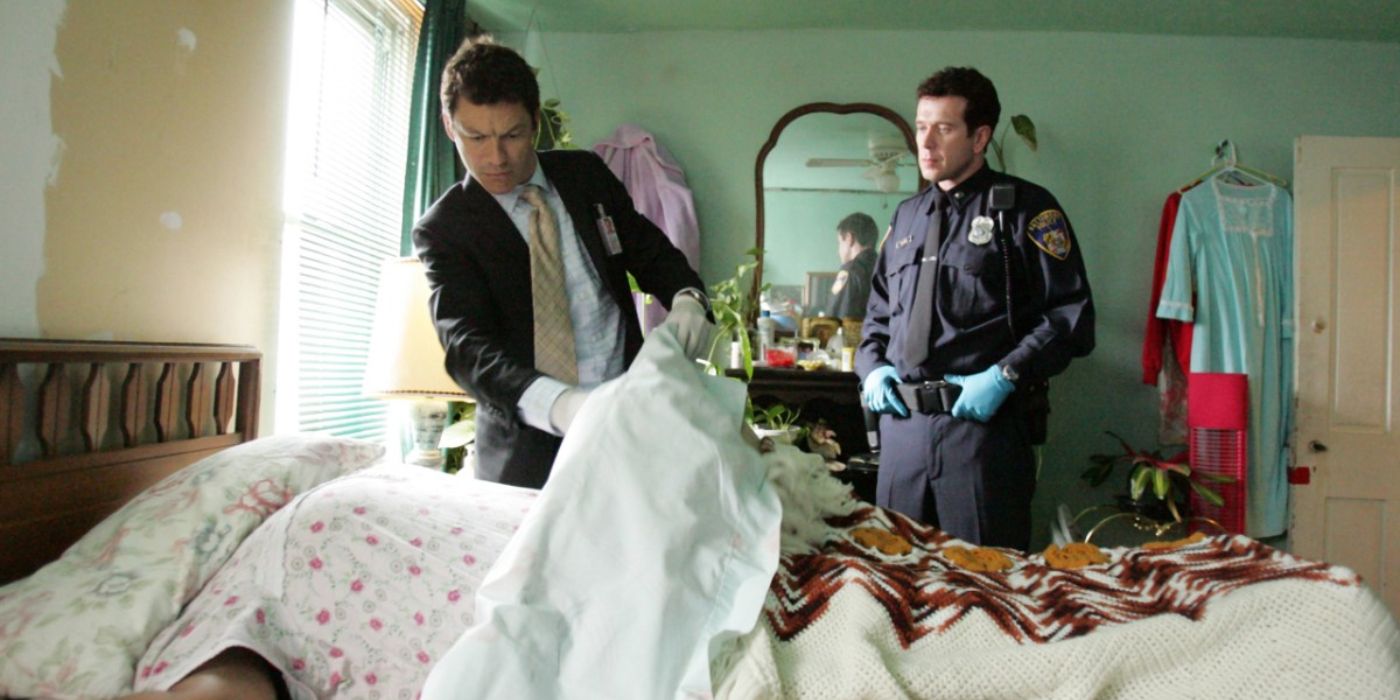
Thankfully, Season 5 of The Wire eventually wraps up the series in the right way, but there was a serious fear developing throughout the final season that the show was careening towards a disastrous conclusion that would nullify the excellence of the four previous seasons. Much of that dread was established in “Unconfirmed Reports.” Of course, this alludes to the episode’s introduction of McNulty’s career-ending grand plan, his aspiration to tamper with crime scenes to concoct a tale of an at-large serial killer, so more money will be funneled into the homicide division.
While the idea of examining police corruption through the lens of McNulty’s ends-justify-the-means desperation has merit, the subplot is simply too ridiculous to be anything other than a banal distraction and a betrayal to the rich air of authenticity the series has always run with. “Unconfirmed Reports” marks The Wire’s most heinous departure from its own integral DNA as a relentlessly realistic crime series that confronts through its palpable social urgency as well as its violence. As such, it is quite comfortably the single worst episode of The Wire, and one of the rare misfires of the series that can genuinely be considered poor television.
Keep Reading: 10 TV Shows That Are Bangers From Start to Finish