This Wild, Campy, and Utterly Engrossing ’70s Sci-Fi Horror Put the Bee in B-Movie
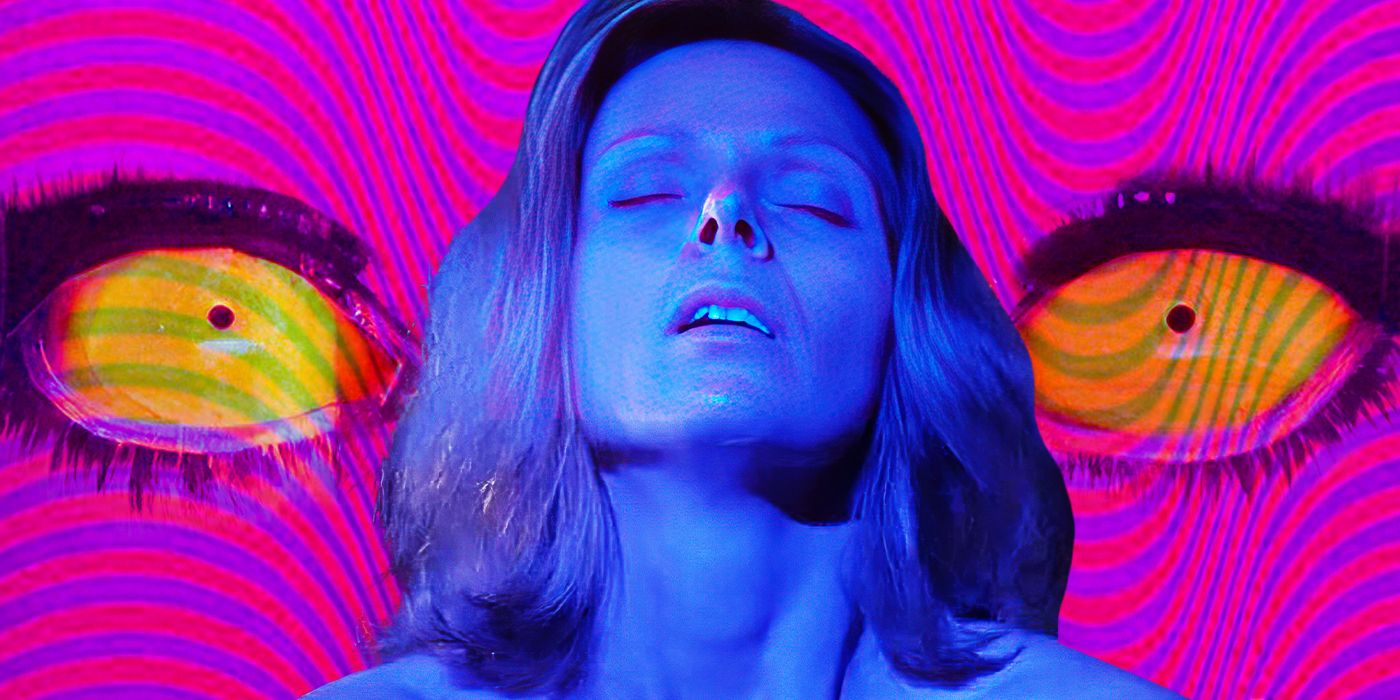
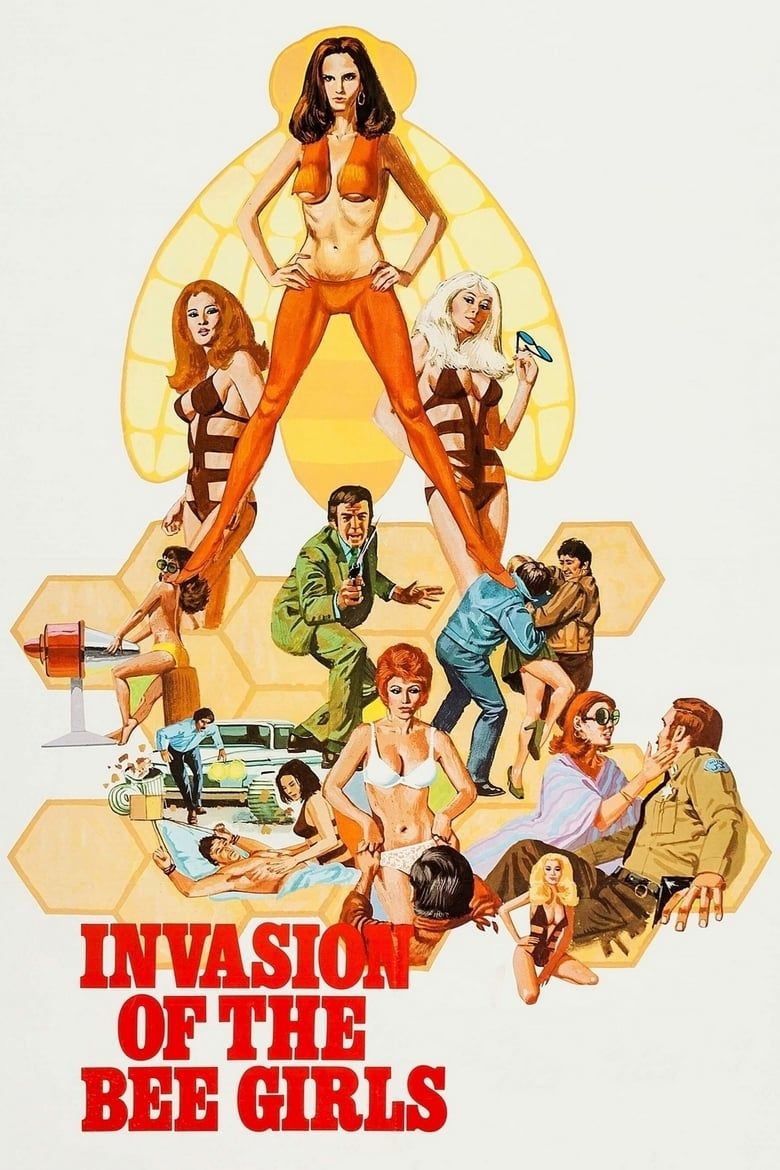
Bugs are a staple of horror, old and new. Nothing creeps people out like creepy crawlies. Hardened fans of gore still get squeamish when they see a spider, or wince at The Mist’s buggy monsters. More popular than the ubiquity of insects is the use of sexuality in horror. Both a common theme and visual language frequently employed for flare, sex in horror goes way back. Rarely, however, have bugs and sex prominently featured in a horror film together. But in 1973, screenwriter Nicholas Meyerand director Denis Sanders found a new method for incorporating bugs into horror to freak out audiences. Invasion of the Bee Girls is about a hive of scientifically mutated women killing through sex. The kooky mad science of the plot puts the “bee” in B-movie. It’s a campy watch, but no one will soon forget.
‘Invasion of the Bee Girls’ Brings Back the Camp of Mad Science Fiction
Some of the best horror movies today toe the line of a noir thriller. Invasion of the Bee Girls uses a federal investigation as the driving action behind the plot. Following iconic G-man, William Smith ,as Agent Neil Agar, Invasion of the Bee Girls opens with the deceptively simple open-and-shut death of a government scientist. The medical examiner chuckles his way through explaining the scientist died of heart exhaustion due to some extracurricular activities, and there’s no real sense of anything too kinky. Agent Agar is sent as a precaution, with the Pentagon liking to “keep an eye” on its assets. While Agar is tying up some loose ends, more men die of heart exhaustion. By the 30-minute mark, so many men have “come while going” that scientists are wondering if this is a new, deadly STD. Agar’s investigation partners him up with head librarian, Julie Zorn (Victoria Vetri). They make an unlikely team, but one that works surprisingly well. The mysterious, tough-guy federal agent makes a perfect contrast against Zorn’s good-girl brainiac.
Related
The 10 Best Sci-Fi B-Movies, Ranked
Science fiction, double B-eature.
As the pair investigate, they take the audience on a guided tour of the wacky world of academia. Watching Agar determine if these scientists are dangerous or just plain weird makes for some solid drama. Once the film pivots to reveal what’s going on with all the unexplainable deaths, Invasion of the Bee Girls can properly indulge in the campiness of old-school horror-meets-science-fiction. The bee girl transformations are not particularly scary but played with a lot of over-the-top drama. Trapped in a human-sized cocoon, it’s impossible not to wonder if the writers confused “bee” for “butterfly.” The women let out scream-queen-level shrieks and reveal their newly transformed bee-selves by stepping out of the cocoons with as much flare as a supermodel. The bee transformation mostly gives the girls a snazzy new hair-do and femme fatale makeup. The one noteworthy change in their physical appearance is totally black eyes, which the women hide behind Jackie-O sunglasses. Being a bee girl is a bit like taking a trip to a new-age salon, it seems.
Actress Anitra Ford is the Queen Bee of ‘Invasion of the Bee Girls’
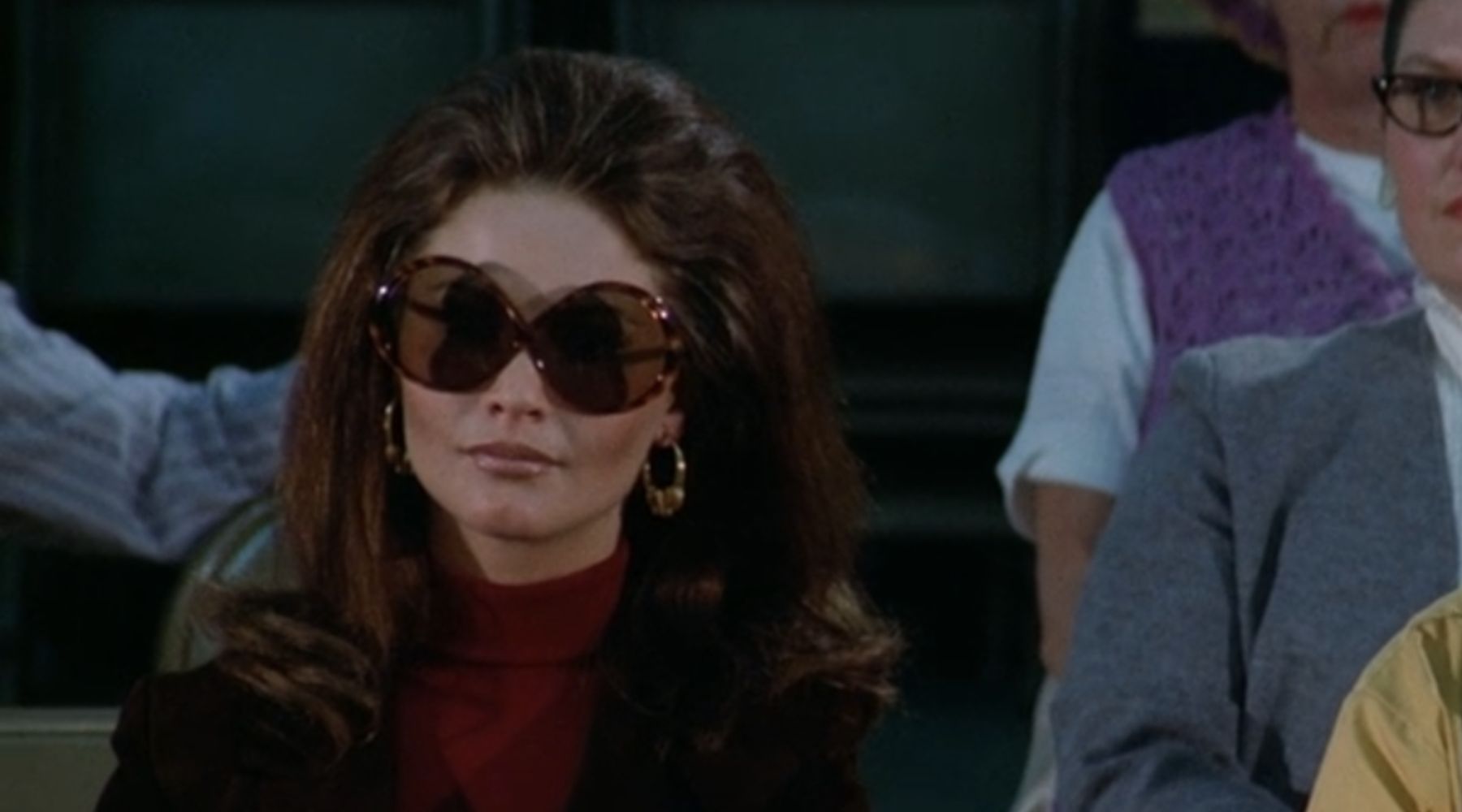
If good horror is a temperature test for the culture, then what’s so scary about hot women with all-black eyes? More than one might think! The hive of bee women all play second fiddle to their queen bee, Dr. Susan Harris, described by one male scientist as an “iceberg.” Played by Anitra Ford, Dr. Harris stuns in every shot she’s in. Her first few on-screen appearances see her in the background, observing the speaking characters from behind a massive pair of sunglasses. She has an alluring, if impenetrable, aura. But this alone isn’t enough to properly scare an audience, then or now. What makes Dr. Harris and her hive a formidable threat is their relationship to the femme fatale.
An archetype popularized in 1940s detective noir, the femme fatale represented cultural anxieties about wild women. Wild could mean anything, from financially independent to murderous. Here, these bee women are using their sexuality to kill. The ‘70s was a time of sexual revolution, and a time of feminist developments, socially and politically. Dr. Harris could then be interpreted as representing a latent anxiety regarding the newfound liberation and autonomy of women in the culture. Julie Zorn is very pointedly used as Dr. Harris’ foil. Zorn is helpful to the investigating Agar. She is an academic but not a doctor, and she is a romantic interest. Dr. Harris is a fun villain, not because she feels like a modern girl, but because she’s glamorous and driven by a specific agenda, regardless of how kooky it may be.
Invasion of the Bee Girls is a fun horror movie, making it a real treat to watch. Despite its B-movie status, including but certainly not limited to silly dialogue, punchy visuals, and melodramatic screaming, no one can forget Invasion of the Bee Girls once they've seen it. An ode to the days of drive-in horror movies, the movie blends together the kitschy science of old sci-fi flicks, detective noir, and sexy horror to create a film that has shocking staying power.
Release Date
June 1, 1973
Runtime
85 minutes
Director
Denis Sanders

- Anitra Ford Dr. Susan Harris
- Victoria Vetri Julie Zorn
- Cliff Osmond Captain Peters